
 English
 русский
 عربى


Metal Parts Die Casting: Tolerances, Alloys and Cost Break-Even Points
Content
- 1 At what volume does metal parts die casting beat machining?
- 2 What tolerances can metal parts die casting actually hold?
- 3 Which alloy should you specify for metal parts die casting?
- 4 How should porosity and internal defects be managed?
- 5 What happens between a raw casting and a shippable part?
- 6 Where does the real risk sit in a die casting purchase?
- 7 What separates a qualified metal parts die casting supplier?
- 8 Frequently asked questions about metal parts die casting
A one-kilogram aluminium housing drops out of a die casting machine in roughly 45 seconds. The same housing machined from solid billet takes more than 20 minutes of spindle time. That comparison looks decisive until you run it across a real production volume, because the process that wins on cycle time does not automatically win on the invoice.
Metal parts die casting forces molten aluminium, zinc or magnesium alloy into a hardened steel cavity under high pressure. Its defining advantage is not speed but repeatability: part number ten thousand comes out of the same tool as part number one, with almost no dimensional drift. That repeatability is what buyers actually purchase, and it is also what makes the tooling investment unavoidable.
At what volume does metal parts die casting beat machining?
Die casting wins the moment the tooling cost, divided by the number of parts you will genuinely run, falls below the machining time it replaces. For a typical 1 kg aluminium housing that crossover sits somewhere between 3,000 and 6,000 pieces.
A single-cavity aluminium tool usually costs $15,000 to $60,000 depending on size, slide count and cavity configuration. That money is spent before the first saleable part exists, so it dominates the cost curve. A $20,000 tool amortised over 1,000 parts adds $20 to every unit. The same tool spread across 100,000 parts adds twenty cents.
Machining behaves very differently. CNC hours are billed by the minute, and a batch of 500 parts costs roughly the same per unit as a batch of 50,000. The variable that decides the process is volume, not the part drawing.
What tolerances can metal parts die casting actually hold?
Standard commercial tolerances for aluminium die casting are approximately plus or minus 0.13 mm on features up to 25 mm, widening as the dimension grows. Critical fits are not held by the casting itself; they are cut afterwards to plus or minus 0.02 to 0.05 mm.
Two physical effects drive that limit. Tool steel expands through every thermal cycle, so the cavity is cut oversized to compensate for shrinkage, which varies between roughly 0.4 percent and 0.7 percent depending on alloy. On top of that, the parting line, slides and ejector layout each introduce their own local variation. The larger the feature, the more absolute error those factors accumulate.
| Feature size | As-cast commercial tolerance | After finish machining |
| Up to 25 mm | plus or minus 0.13 mm | plus or minus 0.02 mm |
| 25 to 100 mm | plus or minus 0.20 mm | plus or minus 0.03 mm |
| 100 to 250 mm | plus or minus 0.30 mm | plus or minus 0.05 mm |
| Above 250 mm | Proportional increase | Proportional increase |
- Dimensions across a parting line behave differently from dimensions within one half of the tool, so they need separate tolerance bands.
- Features formed by a slide or lifter add roughly 0.05 mm of extra variation on top of the base band.
- Wall thickness changes shift solidification time, which shifts shrinkage, which shifts final size.
- Gate location affects fill pressure and therefore local dimensional consistency across the cavity.
Agree the datum before you agree the tolerance. A 0.1 mm argument usually traces back to one drawing dimensioned from a machined face and the other measured from the parting line. Write the inspection datum into the purchase specification and the dispute disappears.
Which alloy should you specify for metal parts die casting?
ADC12 and A380 cover the large majority of aluminium die castings because they balance fluidity, strength and cost better than any alternative at production scale. Change alloy only when corrosion resistance, plating quality or thermal conductivity is the deciding requirement.
| Alloy | Silicon content | Fluidity | Corrosion resistance | Typical application |
| ADC12 / A383 | Around 11 percent | Excellent | Moderate | Enclosures, brackets, structural housings |
| A380 | Around 8.5 percent | Very good | Moderate | Motor housings, heat sinks, general castings |
| A360 | Around 9.5 percent | Good | Good | Parts exposed to moisture or mild chemical contact |
| AlSi9Cu3 | Around 9 percent | Excellent | Moderate | Automotive powertrain and structural components |
| ZAMAK 3 | Not applicable | Excellent | Good | Small precision parts, plated hardware, thin walls |
Zinc alloys flow far better than aluminium, which lets them fill walls below 1 mm and reproduce fine detail without secondary work. The trade-off is weight and cost per kilogram, so they suit small components rather than large structural housings.
Aluminium selection in powertrain and thermal management has shifted hard toward die casting over the past decade. Transmission housings, battery pack end plates and motor shells are all castings produced by weight, and programs serving those applications typically demand alloy certification and full traceability on every heat. Component programs built around new energy and automotive platforms are a good reference point for how these requirements are written into contracts.
How should porosity and internal defects be managed?
You do not eliminate porosity in a die casting, you grade it. Write the acceptance level into the contract and require radiographic or CT verification on defined critical zones rather than a blanket clause.
Two mechanisms cause most internal defects. Gas porosity forms when air or decomposed release agent is trapped during fill and intensification. Shrinkage porosity forms where a thick section solidifies last and cannot be fed. The first is controlled with vacuum assistance, venting and gate design; the second is controlled with wall thickness discipline and thermal management of the die.
ASTM E505 is the standard reference for radiographic inspection of aluminium castings. Instead of accepting a supplier statement of "no porosity", specify a severity level and require documented images with each production lot.
Ask for film or digital records rather than a pass or fail stamp. Porosity that sits outside a sealing face or a structural rib is usually harmless, and rejecting an entire shipment over it costs more than the defect. Porosity under a machined sealing surface is a different matter entirely, and that distinction belongs in the drawing, not in an email thread after the first leak test.
What happens between a raw casting and a shippable part?
Die casting is rarely the last operation. A finished component normally passes through deburring, machining of critical surfaces and a surface treatment, and most of those features should never have been designed into the tool in the first place.
- Trim, deburr and shot blast to remove flash and parting line witness marks.
- Machine sealing faces, bearing bores and threaded features, leaving 0.5 to 0.8 mm of stock on the casting.
- Install inserts and heli-coils after machining, never before.
- Apply anodising, powder coating, passivation or e-coat depending on the environment.
- Pressure or leak test assemblies that carry fluid or gas.
The economics of that sequence are simple: every feature added to the die adds tooling cost and maintenance risk, while many of the same features cost almost nothing to cut afterwards on equipment that is already set up.
Worth casting into the tool
- Fillets and draft angles
- Stiffening ribs and cooling fins
- Non-critical bosses and mounting pads
- Large open bores above roughly 8 mm
- Cosmetic texture and lettering
Better left to machining
- Threads and precision holes
- Sealing and gasket faces
- Undercuts that would need a slide
- Tight-tolerance bearing seats
- Any feature with a 0.05 mm callout
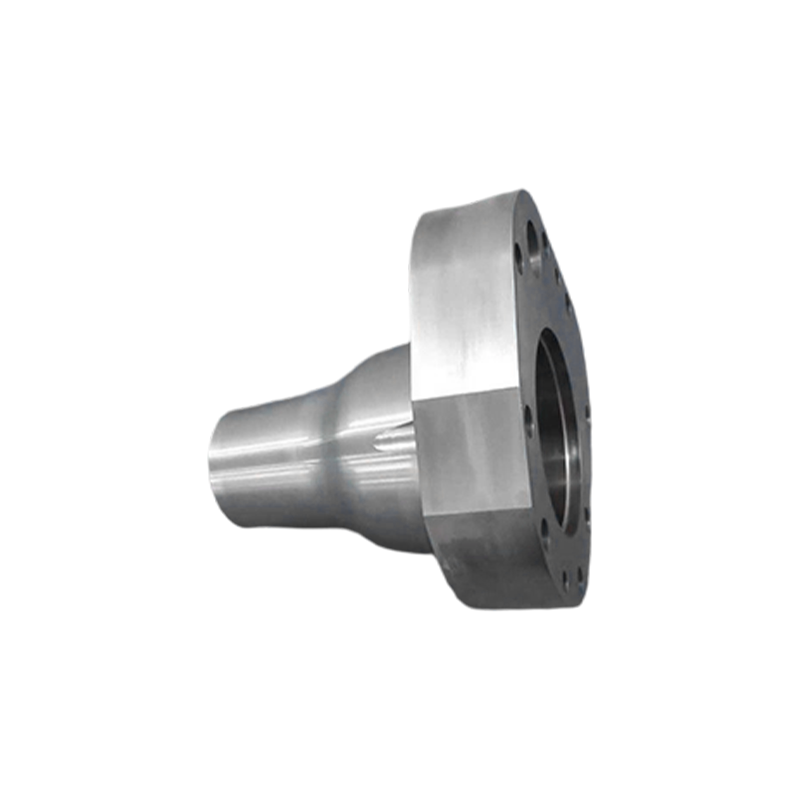 Precision Machining for High-Accuracy Metal and Non-Metal PartsCNC-based precision machining delivering micrometer-level dimensional control and smooth surfaces when casting or tooling approaches fall short.View Product →
Where does the real risk sit in a die casting purchase?
The part itself is rarely where projects fail. Tooling fails, and it fails in the clauses that were left out of the quotation stage rather than in the casting.
- Tool ownership and transfer. Confirm in writing that the tool is your property, and that it can be removed and shipped elsewhere if the relationship ends.
- Maintenance and life expectancy. Define who pays for a weld repair at 60,000 shots and who pays for a replacement cavity.
- Minimum order quantities and price breaks. A price that only works at 50,000 pieces is not a price if your forecast is 4,000.
- Secondary operations subcontracted out. If machining or coating is outsourced, your lead time depends on a supplier you never audited.
- Engineering change amortisation. Every revision to the casting after tool cut adds cost, so agree a change mechanism up front.
A quotation that lists a unit price without a tooling clause, a maintenance clause and a change clause is not a quotation. It is an opening position, and the negotiation happens later when you have no alternative supplier qualified.
What separates a qualified metal parts die casting supplier?
Four conditions matter more than price: the supplier controls the casting process directly, machines critical features in the same facility, works to a documented inspection standard, and can present a tool maintenance plan.
Vertical integration is the practical test. When the casting house and the machine shop are separate companies, tolerance stack-ups become a negotiation between two parties who each blame the other, and you absorb the schedule slip. Suzhou Kokosili International Trading Co., Ltd., working out of Suzhou in Jiangsu Province, runs a 9,000 square metre CNC machining and assembly plant alongside a 10,000 square metre precision casting plant. Its published process list covers high pressure die casting, precision casting, precision machining and stamping, with orders managed through an ERP system and smart warehousing that support delivery scheduling across a mixed project portfolio.
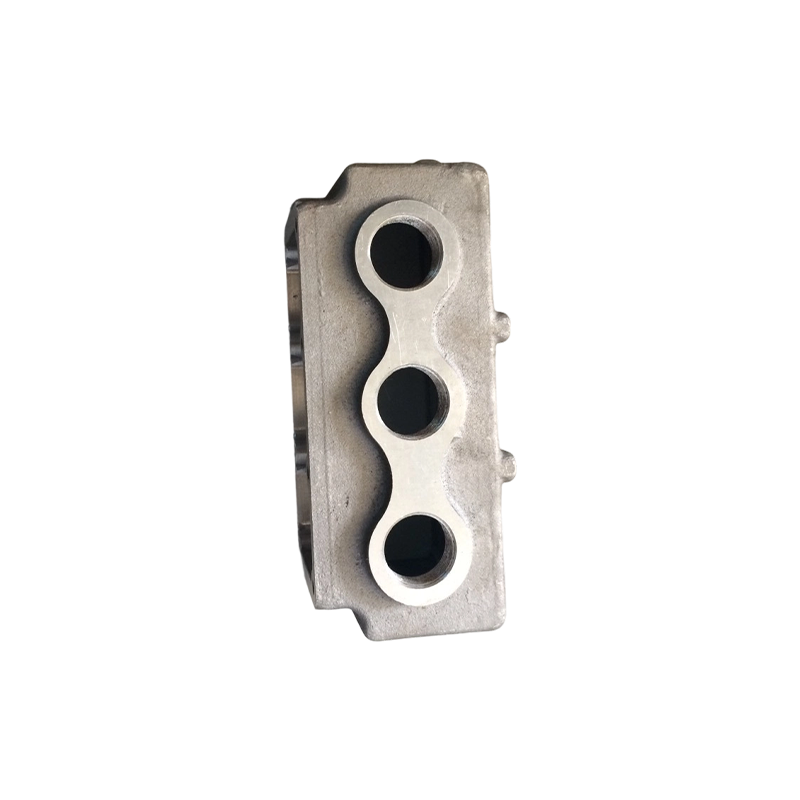 High-Pressure Casting for Mass-Produced Thin-Walled ComponentsHigh-pressure casting for lightweight, thin-walled parts, suited to high-volume automotive and electronics production, with tooling costs typically $15,000–$60,000 and 3,000–6,000-piece crossover for 1 kg aluminium.View Product →
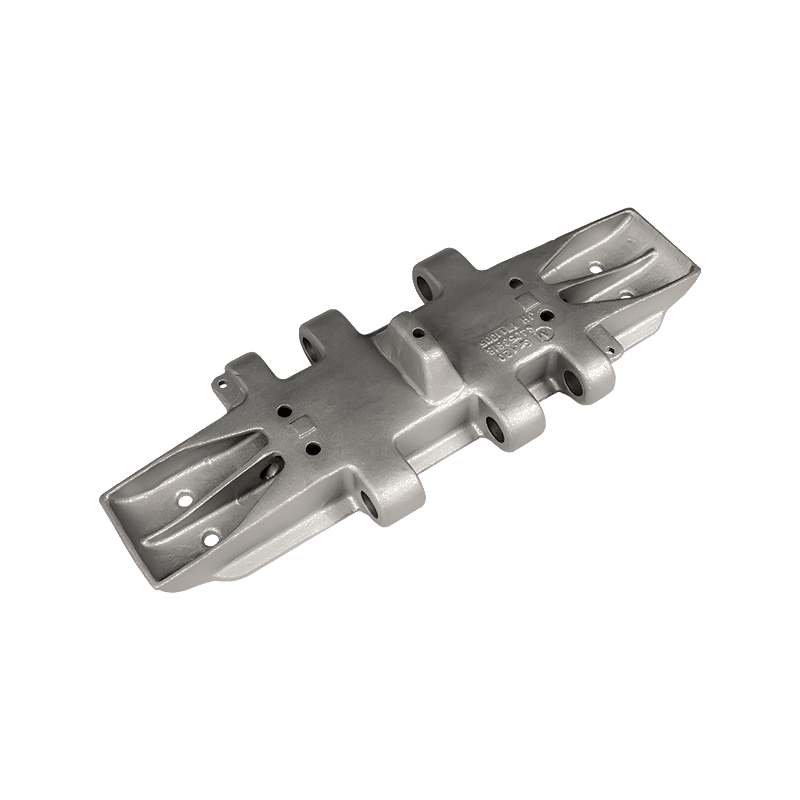 Custom Precision Casting for Complex High-Value Metal ComponentsPrecision casting for complex, high-value metal parts with CT4-CT6 tolerance, ideal for small batches, though tooling costs and volume thresholds may favor other processes.View Product →
Frequently asked questions about metal parts die casting
Is die casting cheaper than CNC machining?
Only above a certain volume. Tooling typically costs $15,000 to $60,000, so the crossover for a 1 kg aluminium part usually falls between 3,000 and 6,000 pieces. Below that, machining or sand casting normally costs less overall.
How much machining stock should be left on a casting?
Plan on 0.5 to 0.8 mm on surfaces that will be cut. That allowance covers casting variation, heat treat distortion and clamping error without adding unnecessary cycle time at the machine.
Can die cast aluminium parts be welded?
They can be welded, but not reliably. Entrapped gas expands during welding and produces porosity in the weld pool. Castings intended for welding should be specified with low gas content and, where possible, welded in the as-cast condition rather than after machining.
How long does an aluminium die casting tool last?
A well-maintained H13 tool typically produces 80,000 to 150,000 shots before replacement, depending on alloy temperature, cycle time and cooling practice. Welded repairs can extend life further, though each repair shortens the interval to the next one.
Related products


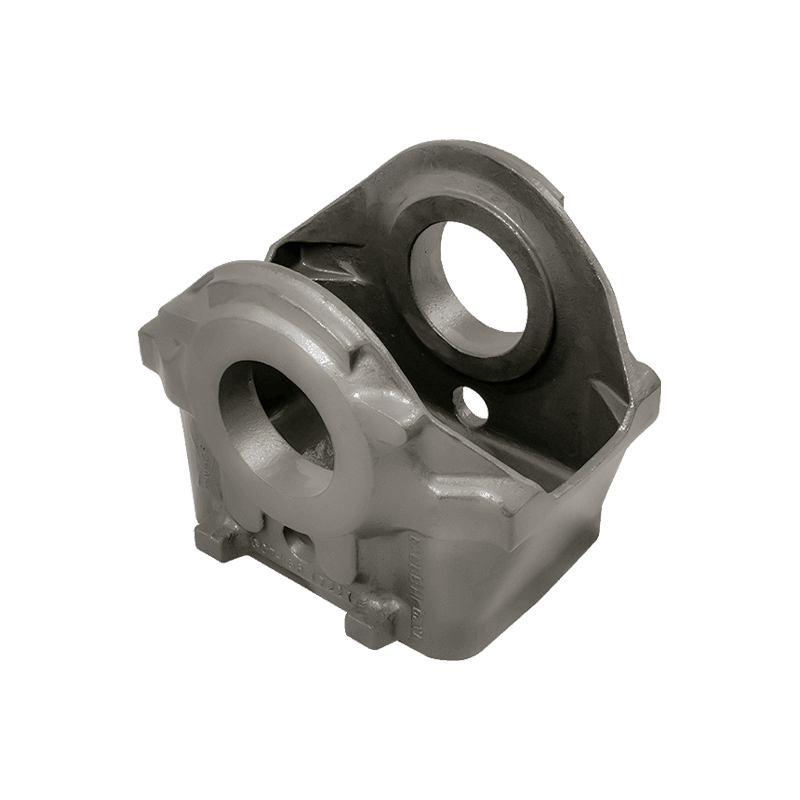
Get In Touch
Follow us
Quick Links
Contact Us
Mobile : +86-18015435510
Mobile : +86-18013715311
Email : [email protected] Email :
whatsApp : +86-18118195312
Address : No. 8, Caiyunxiang Road, Xinzhuang Town, Changshu City
