
 English
 русский
 عربى


Fabricate Metal Parts: Process Selection Guide for Precision Manufacturing
Content
- 1 Tolerance and Volume Rule Out Most Routes Before Price Is Discussed
- 2 Comparing the Five Routes Used to Fabricate Metal Parts
- 3 Casting Delivers the Lowest Unit Cost Above About 3,000 Pieces a Year
- 4 CNC Machining Holds Any Tolerance Tighter Than Plus or Minus 0.05 mm
- 5 Stamping and Sheet Metal Fabrication Win on Flat Parts and Enclosures
- 6 A Four-Step Sequence That Keeps Quotes Comparable
- 7 How to Fabricate Metal Parts Without Overpaying: Cost, Lead Time, and Evidence
- 8 Frequently Asked Questions About Fabricating Metal Parts
An RFQ for a 180 mm aluminum bracket arrives with two bearing bores held to plus or minus 0.02 mm, an annual volume of 800 pieces, and a cost target that assumes high pressure die casting. Those three constraints cannot all be satisfied by one process, and the supplier who claims otherwise is the one who absorbs the rework later. Deciding how to fabricate metal parts is a tolerance and volume decision first, a geometry decision second, and a price negotiation last.
Reversing that order is expensive. Programs that buy on unit price and validate afterwards usually find the mismatch at the second purchase order, after tooling has been cut and the first article report shows a process capability index below 1.33.
Tolerance and Volume Rule Out Most Routes Before Price Is Discussed
Tolerance and annual volume together eliminate roughly four out of five candidate processes, so both numbers have to be locked in before a supplier is contacted.
Metal fabrication is the conversion of metal stock into finished parts through casting, forming, cutting, joining, or material removal, followed by finishing operations that bring surfaces, edges, and dimensions to print.
The spread between routes is wide. High pressure die casting holds about plus or minus 0.10 mm on a 100 mm dimension, sand casting holds about plus or minus 0.50 mm, investment casting sits near plus or minus 0.13 mm, stamped sheet holds plus or minus 0.25 mm across a bend, and CNC machining routinely holds plus or minus 0.01 mm. A print calling for 0.02 mm on a bore is therefore not a casting print. It is a casting print with a machining operation attached to it.
Four inputs decide the route: tightest functional tolerance, annual and three-year volume, part size with wall thickness, and finishing or heat treatment requirements.
Comparing the Five Routes Used to Fabricate Metal Parts
Five routes cover the overwhelming majority of production programs, and each one owns a volume band where it is the rational choice rather than a compromise.
| Route | Achievable tolerance | Economic annual volume | Tooling investment | Main risk |
| Sand casting | plus or minus 0.50 mm | 50 to 5,000 pieces | 1,000 to 5,000 USD | Porosity and rough as-cast surface |
| Investment casting | plus or minus 0.13 mm | 500 to 20,000 pieces | 3,000 to 25,000 USD | Wax pattern cost and part size limit |
| High pressure die casting | plus or minus 0.10 mm | 3,000 to 500,000 pieces | 20,000 to 80,000 USD | Die lead time and gas porosity |
| Stamping and sheet metal | plus or minus 0.10 mm cut, 0.25 mm bend | 500 to 1,000,000 pieces | 8,000 to 60,000 USD | Springback and progressive die wear |
| CNC machining | plus or minus 0.01 mm | 1 to 20,000 pieces | 0 to 2,000 USD | Cycle time and material waste |
Read the table by column, not by row. A tolerance of 0.01 mm forces the last row regardless of volume. A volume of 200,000 pieces forces one of the middle rows regardless of the price you were hoping for.
Casting Delivers the Lowest Unit Cost Above About 3,000 Pieces a Year
Above roughly 3,000 pieces per year, a cast part with machined critical features costs less per piece than a fully machined one, even after tooling is amortized.
A die cast aluminum housing typically needs a wall between 1.5 mm and 4 mm, draft of 1 to 3 degrees on every vertical face, and a shot cycle of 30 to 90 seconds. Tooling runs 20,000 to 80,000 USD depending on slides, and gas porosity is the failure mode that matters most, which is why x-ray or density checks belong in the inspection plan rather than in the negotiation.
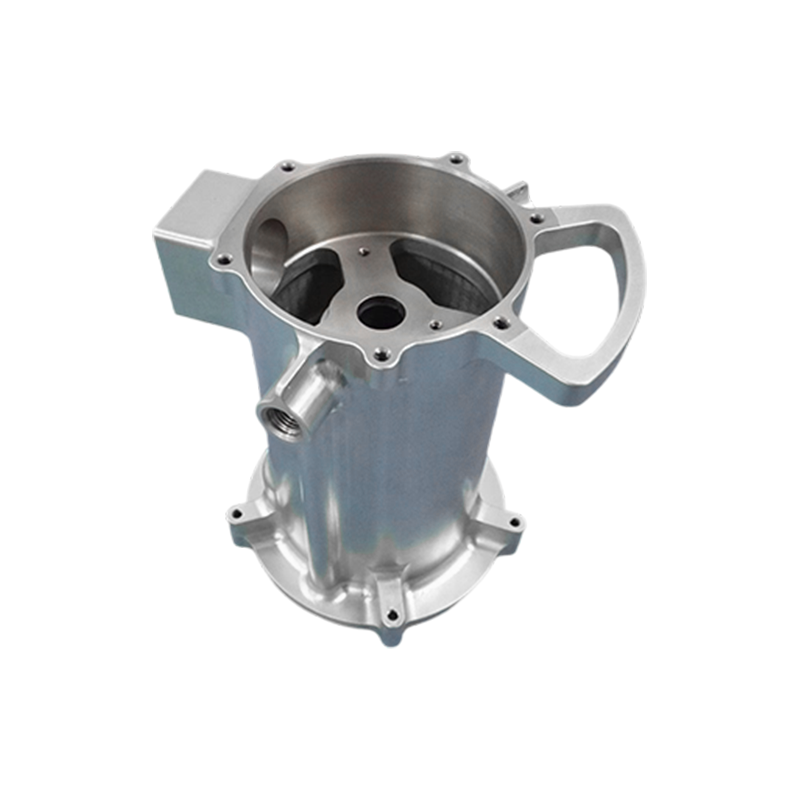
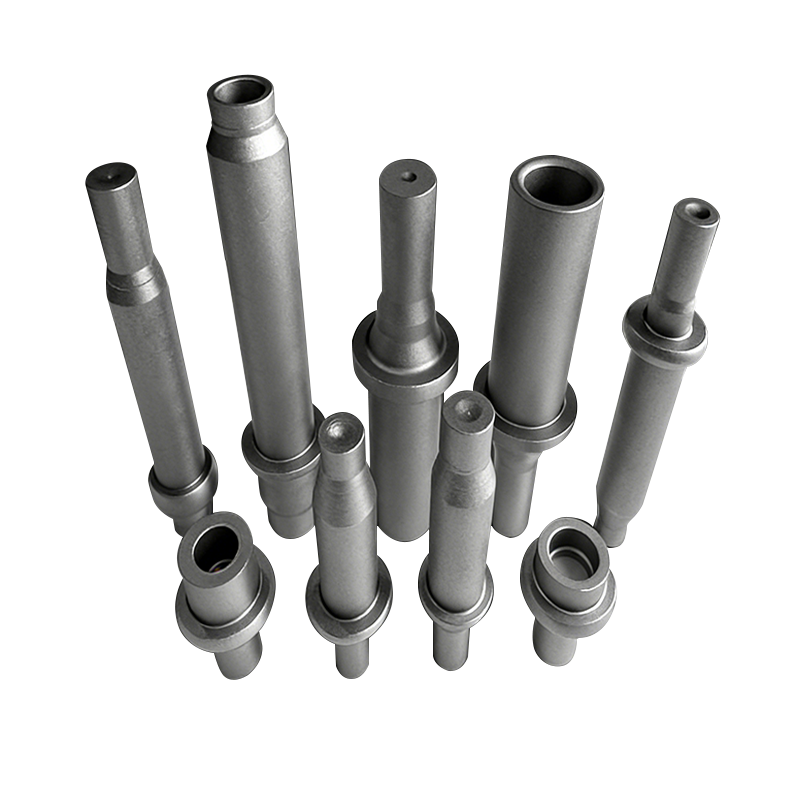
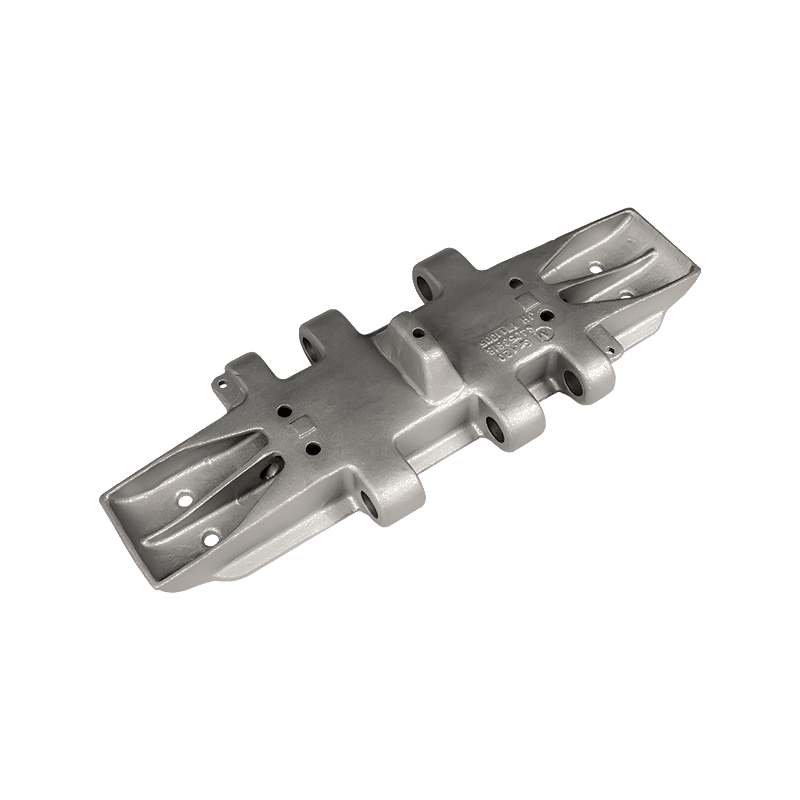 Precision Casting for Complex Metal ComponentsLost-wax based process for near-net shapes, suited to complex high-value parts, especially difficult-to-machine alloys and small-batch production.View Product →
Sand casting still wins between 50 and 500 pieces: pattern cost stays under about 5,000 USD, but plan on plus or minus 0.5 mm and a rougher surface.
CNC Machining Holds Any Tolerance Tighter Than Plus or Minus 0.05 mm
Any feature tighter than plus or minus 0.05 mm, or any program under about 500 pieces, belongs on a CNC machine, either cutting from solid stock or from a near-net cast blank.
Setup consumes 2 to 6 hours on a typical three-axis job, and shop rates run 45 to 120 USD per hour. At 100 pieces, a milled bracket can cost two to three times its cast equivalent. At 10,000 pieces the gap narrows to roughly 1.5 times, because cycle time rather than tooling dominates the price. Five-axis machining cuts fixtures from four to two on a bracket with angled faces and removes 20 to 30 percent of the cost of the same part run across multiple three-axis setups. A cast blank that leaves 1.5 mm of stock on machined faces cuts cycle time by 40 to 60 percent compared with cutting the part out of plate.
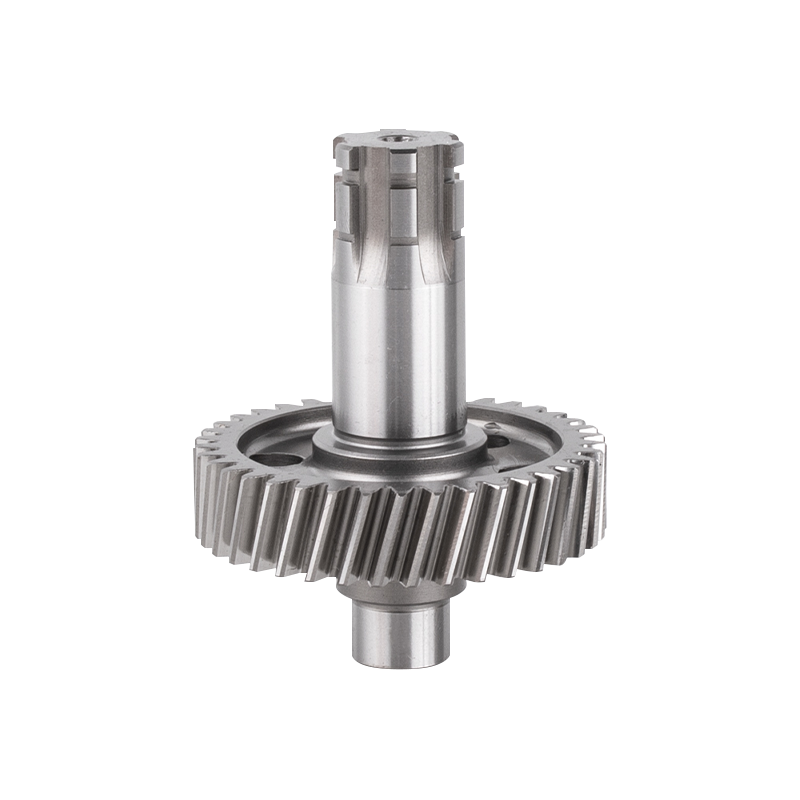
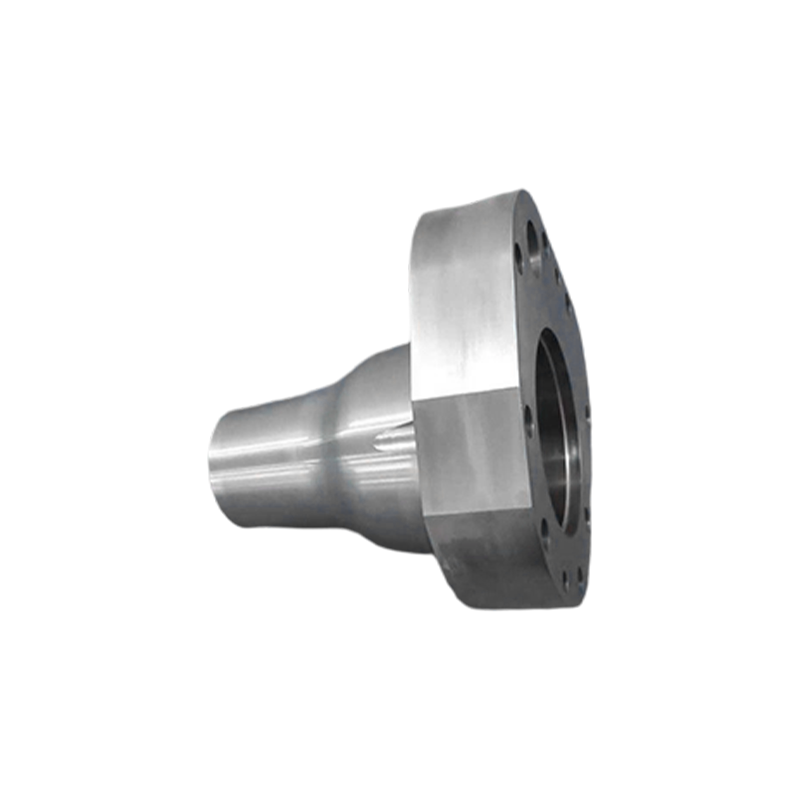 Precision Machining for Tight-Tolerance Metal and Non-Metal PartsCNC process achieving micrometer-level dimensional control and smooth surfaces for parts requiring reliable sealing, transmission, and precision connections.View Product →
Material removal is the cost. Quoting a part that has 60 percent of its mass machined away as solid stock is the fastest route to an uncompetitive price.
Stamping and Sheet Metal Fabrication Win on Flat Parts and Enclosures
Parts that begin as flat sheet under about 6 mm thick should be stamped or formed rather than machined, once annual volume passes roughly 500 pieces.
Laser cutting needs no tooling at all and runs 0.5 to 3 USD per part at prototype volume, which is why most sheet metal programs start there. A progressive die then costs 8,000 to 60,000 USD but drops the per-part price by an order of magnitude. Two design rules prevent most rework: keep the inside bend radius at or above material thickness, and keep holes at least 2.5 times material thickness away from a bend line. On 304 stainless, expect springback of 1 to 3 degrees, so the die has to be built for the material rather than for the drawing alone.
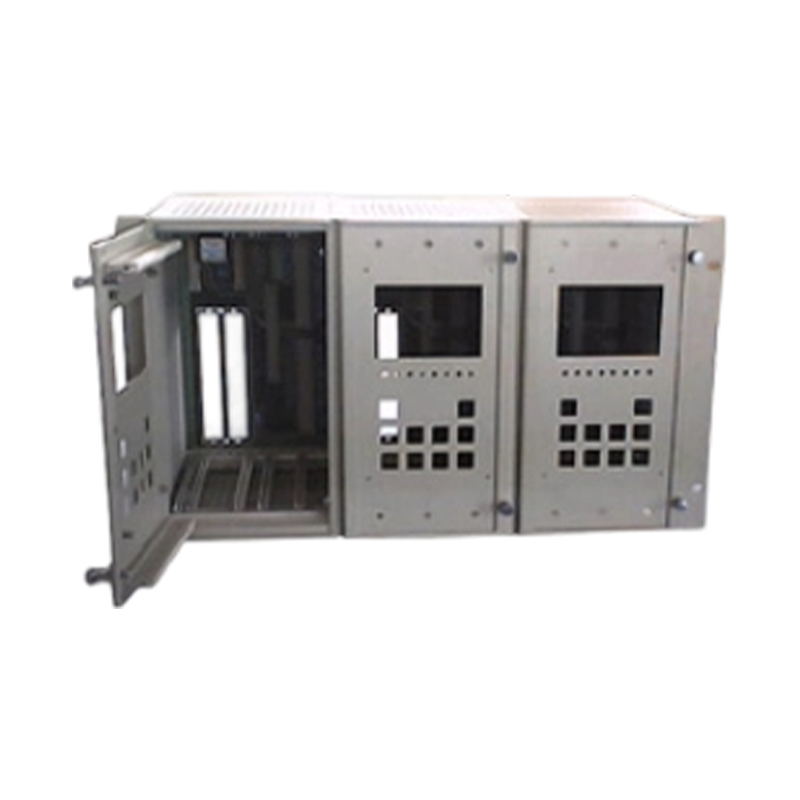
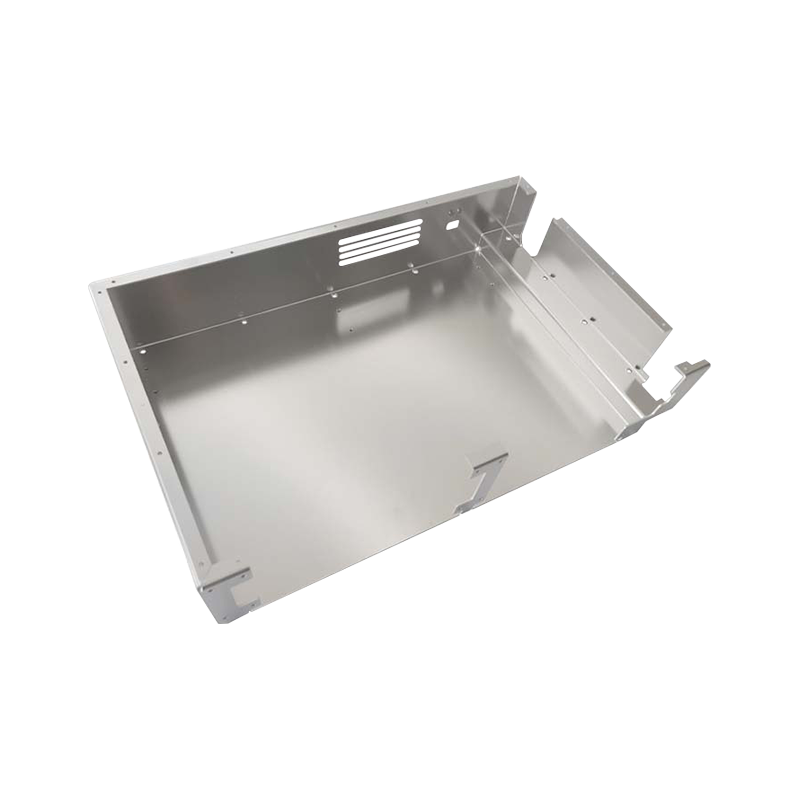 Custom Stamping and Sheet Metal Fabrication for Functional PartsPunching, bending, and deep drawing of metal sheets into rigid, lightweight casings, brackets, and chassis with rapid forming and broad material options.View Product →
Tolerance stacks, not single dimensions, break sheet metal assemblies. Four bends on a 2 mm panel can accumulate 0.8 mm of variation before any hole is punched.
A Four-Step Sequence That Keeps Quotes Comparable
Fixing the inputs in one order makes every quotation describe the same part, which is the only condition under which quoted prices can be compared at all.
Freeze the tightest functional tolerance. Identify the two or three features that carry function and label everything else as general tolerance. This single step decides whether the part is cast, stamped, or machined.
Set annual and three-year volume. Tooling amortization is calculated over the program life, not the first order, so a 20,000 USD die spread over 900 pieces per year is 22 USD per part in tooling alone.
Choose the route, then price the hybrid. Most real programs are cast plus machined, or stamped plus welded, and the hybrid is usually cheaper than either pure route.
Require evidence before tooling release. A first article inspection report, material certificates, and a capability study on the tight features should be contract conditions, not favors.
How to Fabricate Metal Parts Without Overpaying: Cost, Lead Time, and Evidence
Cost per piece, lead time, and inspection evidence are the three numbers that separate a viable quote from a risky one, and all three should be requested in the same format from every supplier.
Lead time scales the same way. Casting needs a pattern or die before the first part exists, while machining starts within days of material arriving.
- Sand casting: 3 to 5 weeks, plus 2 weeks for pattern making.
- Investment casting: 5 to 7 weeks from wax tooling release.
- High pressure die casting: 8 to 12 weeks including die build and first article.
- CNC machining: 2 to 3 weeks from stock, 4 to 5 weeks from a cast blank.
- Stamping and sheet metal: 5 to 8 weeks when a progressive die has to be built.
Evidence is where most buyers leave money on the table. Request a documented inspection and first article process before tooling is released, with dimensional results on the tight features, material certificates, and a statement of which instrument was used for each check.
Where a program spans casting, machining, and finishing, a single supplier carrying all three stages removes the tolerance stack that appears when parts travel between vendors. That consolidated one-stop fabrication and sourcing model is also what keeps tooling, stock, and inspection records in one traceable chain.
Frequently Asked Questions About Fabricating Metal Parts
What is the cheapest way to fabricate metal parts in small quantities?
For 1 to 100 pieces, CNC machining from standard plate or bar is almost always cheapest because nothing is spent on tooling. A simple bracket machined from 6061 aluminum typically lands between 35 and 90 USD per piece at 50 pieces, while a single die casting tool alone would cost 20,000 USD or more. Sand casting becomes competitive somewhere between 300 and 800 pieces for parts above 1 kg.
At what volume does casting become cheaper than CNC machining?
For a die cast aluminum part with machined bores, the crossover sits near 3,000 pieces per year, because that is roughly where tooling amortization drops below the machining cycle cost it replaces. Below that volume, casting only makes sense when the geometry cannot be machined economically, for example a thin-walled housing with internal ribs.
What tolerance should be on a drawing to avoid overpaying?
Put tolerance only where it functions. Most mounting holes and clearance features are fine at plus or minus 0.20 mm. Tightening an unrelated dimension from 0.20 mm to 0.05 mm can add 15 to 30 percent to the machining cost of the whole part, and on a cast part it can force a secondary operation that would otherwise be unnecessary.
How long does the first batch of fabricated metal parts take?
From purchase order to first article, CNC machining runs 2 to 3 weeks, sand casting 3 to 5 weeks plus 2 weeks for the pattern, stamping 5 to 8 weeks including die build, and high pressure die casting 8 to 12 weeks. Adding the first article inspection and any corrective loop typically adds one to two weeks on top of those figures.
Related products


Get In Touch
Follow us
Quick Links
Contact Us
Mobile : +86-18015435510
Mobile : +86-18013715311
Email : [email protected] Email :
whatsApp : +86-18118195312
Address : No. 8, Caiyunxiang Road, Xinzhuang Town, Changshu City
