
 English
 русский
 عربى


Custom Sheet Metal Parts: Material, Tolerance, and Supplier Selection Guide
Content
A missing inner radius in a bracket drawing, a quote that shifts 40 percent after engineering review, a galvanized steel part that arrives soft after assembly—these are the reasons purchasing teams lose weeks on custom sheet metal parts. For a production buyer, the real decision is not the base metal. It is which fabricator can commit to a tolerance class, control the tooling, and prove it on the first article.
Custom Sheet Metal Parts Actually Entail
A custom sheet metal part is a non-standard metal component fabricated from raw sheet stock through cutting, bending, forming, welding, or finishing, with a dimensional requirement often between +/−0.05 mm and +/−0.5 mm. The definition looks simple, but the real variables appear in three places: the material grade, the bend geometry, and the inspection method.
Custom sheet metal parts are non-standard metal components produced from sheet stock through cutting, forming, and finishing. The achievable tolerance depends on the process, material thickness, and tooling condition, not just the drawing callout.
The material grade determines the minimum bend radius, the springback, the punch clearance, and ultimately whether a risk of cracking exists at the flange. A 304 stainless steel with a 1.5 mm thickness does not behave like a 5052 aluminum at the same thickness. This is why a fabricator often recommends a part material after seeing your loading condition, not before.
The bend geometry also matters. If a tight return flange sits next to a large cutout, the form die may distort it. The experienced shop resolves this with a relieving slot at the cutout. This is a classic sheet metal adjustment that does not appear in the standard 3D model.
Custom Sheet Metal Parts Material Selection: Cost and Performance
Material choice sets the upper limit for performance and the floor for cost. For a custom sheet metal part, the following trade-offs are practical, not theoretical.
Suzhou Kokosili International Trading Co., Ltd. operates a 9,000 m2 CNC and assembly shop alongside a 10,000 m2 precision casting facility, which allows the company to combine fabrication methods for sheet metal parts that also require cast or machined features. This cross-process capability matters when a part needs a stamped body plus a precision-machined locating boss.
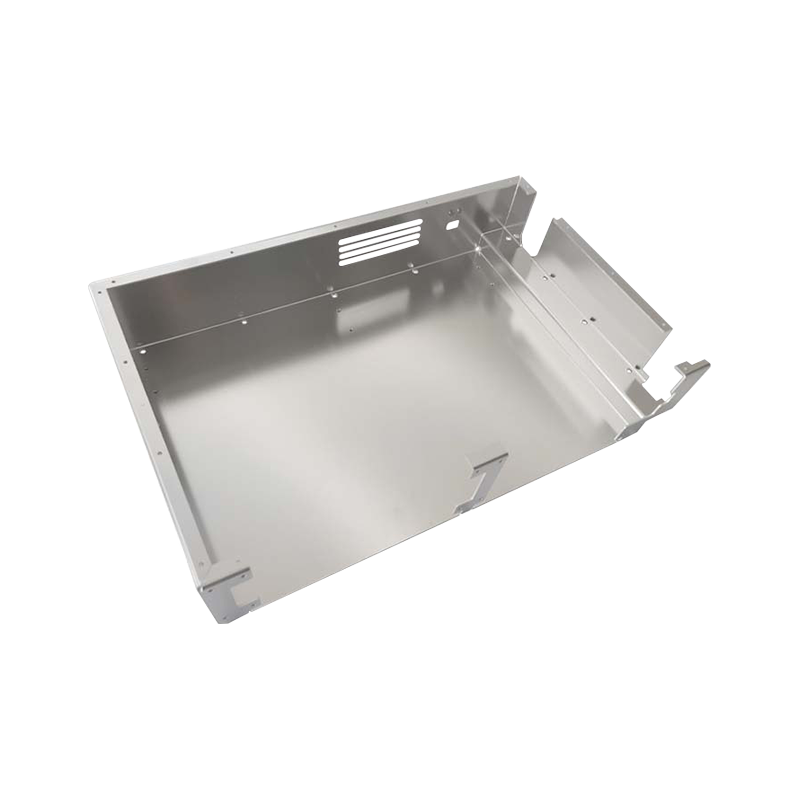 Stamping and Sheet Metal Fabrication ServicesThis process covers punching, bending, and deep drawing to create strong, lightweight metal shells and structures. It suits prototypes with laser cutting and scales to high-volume stamping, offering fast forming and high rigidity for various industries.View Product →
Process Choice: Laser Cutting, Stamping, or CNC Bending
Start with the quantity, then the complexity. Laser cutting is the fastest route for prototypes because it eliminates tooling. Stamping becomes economical at high volume because the die cost is spread across thousands of parts. CNC bending adds control for complex flanges and tight radii.
| Item | Laser cutting | Stamping | CNC bending |
| Material utilization | 85-95% | 70-85% | 90-95% |
| Typical tolerance | +/-0.1 mm | +/-0.05 mm | +/-0.2 mm |
| Setup cost | Low | High | Low-Medium |
| Minimum batch | 1 piece | 500+ pieces | 1 piece |
| Lead time | 1-3 days | 2-4 weeks | 1-3 days |
Prototype mindset
- Use laser cutting to avoid tooling investment
- Hand bend or press brake form for small runs
- Inspect on the surface plate before committing
Production mindset
- Choose stamping when the die cost amortizes
- Plan for tool maintenance and die storage
- Build samples from the production tooling
Tolerances and Quality Verification in Sheet Metal Fabrication
In sheet metal, the tolerance that matters most is the one related to the bend angle and the flatness after forming. Many shops state a single tolerance class, but the actual achievable result varies by material thickness and tool wear.
Inspect on the surface plate with a CMM, a height gauge, and a radius gauge. The testing equipment and the inspection procedure are as important as the production method. A custom sheet metal part with a +/−0.2 mm bend-width tolerance can still fail at the flatness level if weld distortion is not controlled.
Ask for calibration records on the test equipment and request a digital report with the first article. A supplier that measures the critical dimensions and records actual values, rather than checking the box, will catch drift earlier in the run.
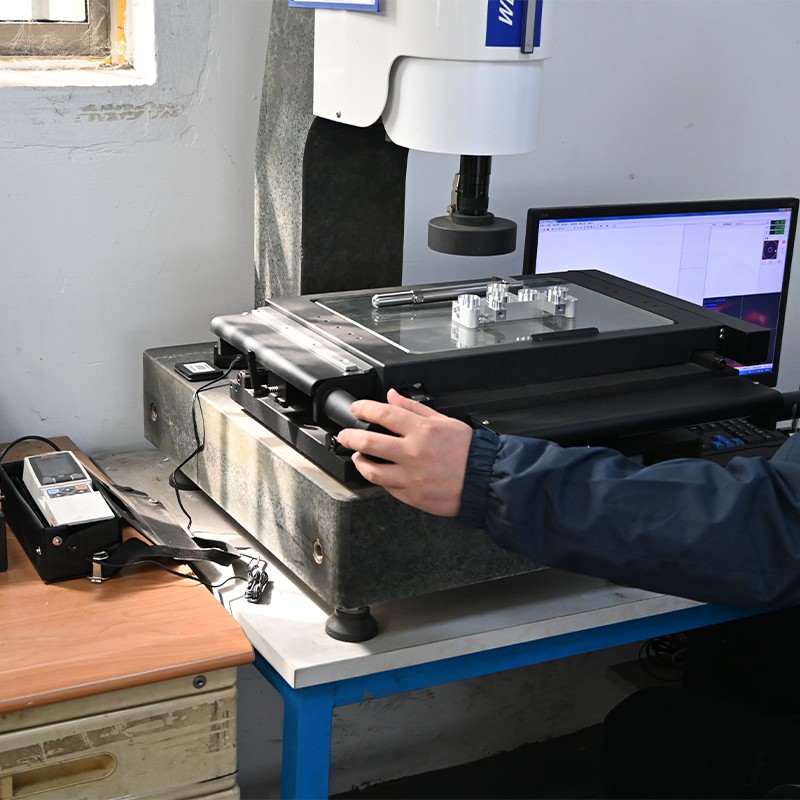 Precision Testing Equipment with CMM and Optical InspectionEquipped with CMM and optical projectors, this system ensures accurate dimensional verification for complex parts. It aids in first-article inspection and process sampling, supporting quality control in aerospace, energy, and automotive sectors.View Product →
How to Evaluate a Custom Sheet Metal Supplier in Practice
The supplier audit is not a paper review. Ask for the welding procedure qualification, the CMM calibration records, and the last first-article report from a repeat job. These three data points predict your delivery outcome better than any certificate.
- Send your CAD and BOM with full tolerance callouts
- Review the DFM feedback for bend radius and tooling concerns
- Audit the inspection plan and the testing equipment
- Require a first article report with measured values
Suzhou Kokosili International Trading Co., Ltd. covers industries including aerospace, automation equipment, medical devices, new energy vehicles, and semiconductors. The company's one-stop service prepares custom sheet metal parts for domestic and international customers, supported by ERP data management and an intelligent warehouse system for responsive scheduling.
The practical supplier evaluation always comes back to the same question: can the shop control the interacting variables of material, tooling, and measurement? If the answer is yes, the quote becomes a purchasing plan instead of a gamble.
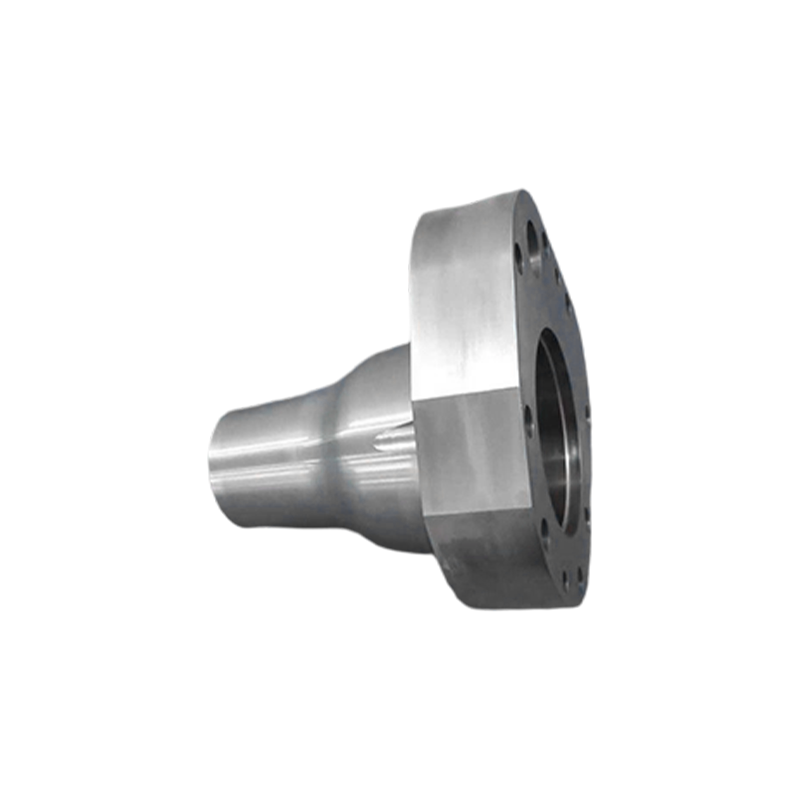 Precision CNC Machining for Tight Tolerance PartsUtilizes CNC equipment to achieve micrometer-level precision and smooth finishes, essential for components like engine blades and medical implants. This capability ensures reliable performance in high-end manufacturing applications.View Product →
Frequently Asked Questions
What is the typical minimum order quantity for custom sheet metal parts?
For sheet metal fabrication, the minimum order can be one piece for laser-cut parts, but stamping requires a minimum batch of 500 or more because the die cost needs amortization. CNC bending works well for both prototypes and production runs.
How do I specify tolerances for a custom sheet metal part?
Use the GD&T system and call out bend angle tolerances on the drawing. A practical starting point is +/−0.2 mm for flat cutouts and +/−0.5 mm for bend geometry. Tighten these only when the assembly truly demands it.
What materials are commonly used for custom sheet metal parts?
Carbon steel, stainless steel, aluminum, copper, and brass are the common choices. Each one changes both the tooling design and the cost structure of the part, so material specification should be completed before the tooling review.
Can you provide one-stop service for custom sheet metal parts?
Yes. Suzhou Kokosili International Trading Co., Ltd. offers one-stop service that covers DFM review, material procurement, fabrication, quality inspection, and delivery for domestic and international customers.
The shortest path to a stable custom sheet metal part program is a supplier that treats material selection, process choice, and inspection as one system rather than three separate quotes.
Related products


Get In Touch
Follow us
Quick Links
Contact Us
Mobile : +86-18015435510
Mobile : +86-18013715311
Email : [email protected] Email :
whatsApp : +86-18118195312
Address : No. 8, Caiyunxiang Road, Xinzhuang Town, Changshu City
