
 English
 русский
 عربى


Casting Metal Parts: A Practical Process Selection Guide for OEM Buyers
Content
- 1 How Casting Metal Parts Are Made: From Mold to Finished Component
- 2 High-Pressure Die Casting vs Precision Casting: Which Fits Your Volume?
- 3 How to Evaluate a Casting Metal Parts Supplier
- 4 Common Casting Defects and How Inspection Catches Them
- 5 Supply Chain Risks in Casting Metal Parts Procurement
- 6 FAQ: Casting Metal Parts
This article covers the practical decisions behind casting metal parts: what drives quality, how process selection changes cost and tolerance, and how to evaluate a casting supplier before committing to tooling.
How Casting Metal Parts Are Made: From Mold to Finished Component
A cast metal part is produced in three stages: tooling preparation, metal casting, and post-casting processing. Each stage introduces variables that determine whether the final part meets the drawing tolerance.
Tooling preparation starts with mold design. The casting die geometry controls part shape, cooling rate, and how molten metal fills the cavity. In high-pressure die casting, the die cavity is machined to tolerances of +/-0.01mm because every cast part inherits the die precision. In precision casting, the wax pattern and ceramic shell define the surface finish and dimensional accuracy.
Metal casting happens when the alloy melts at a controlled temperature and enters the cavity. For aluminum alloy A380, the typical pouring temperature is 660 to 700 degrees Celsius in die casting. Cooling rate directly affects grain structure and mechanical properties such as tensile strength and hardness.
Post-casting processing includes gate removal, heat treatment, surface finishing, CNC machining where needed, and final inspection. At Suzhou Kokosili International Trading Co., Ltd., the 10,000-square-meter precision casting factory supports all three stages, while a separate 9,000-square-meter CNC machining assembly factory handles the secondary precision work that many cast parts require.
High-Pressure Die Casting vs Precision Casting: Which Fits Your Volume?
High-pressure die casting produces high-volume aluminum and zinc parts with fast cycle times, while precision casting delivers complex shapes and tighter tolerances for steel and superalloys.
High-pressure die casting
The process injects molten metal into a steel die at 10 to 100 MPa. Cycle times range from 30 seconds to 2 minutes for small parts, making it the lowest-cost option for annual volumes above 10,000 pieces. The trade-off is design freedom: cores, undercuts, and walls below 1.0mm are difficult to produce. This is the process most often used for aluminum automotive and new-energy components.
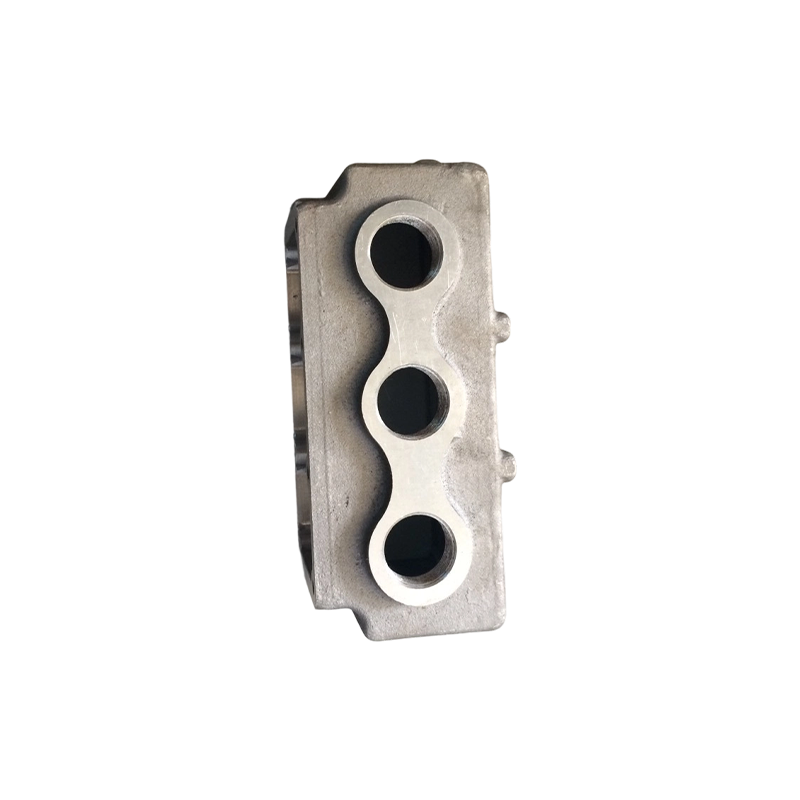 High-Pressure Casting for Mass-Produced Lightweight PartsHigh-pressure casting injects molten metal into a steel die at 10–100 MPa, enabling cycle times of 30 seconds to 2 minutes. Ideal for volumes above 10,000 pieces, it suits aluminum automotive and new-energy components with thin walls and smooth surfaces.View Product →
Precision casting
Also called investment casting, precision casting builds a wax pattern and coats it in ceramic to form a shell, then melts the wax out and pours metal into the cavity. It handles complex geometries and produces near-net shapes with surface finishes of 3.2 to 6.3 Ra and tolerances of +/-0.025mm. The process is slower, so it suits lower volumes and parts made from stainless steel, titanium, and nickel-based alloys, where machining from solid bar would waste material and drive cost up.
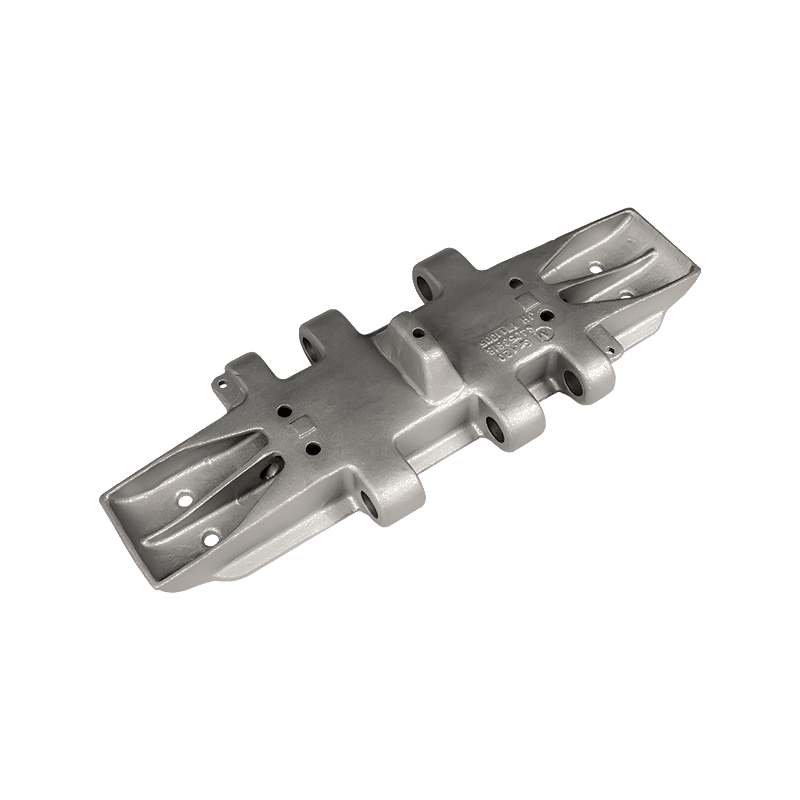 Precision Casting for Complex Geometries and Hard-to-Machine AlloysPrecision casting creates near-net shapes with tolerances of +/-0.025mm and surface finishes of 3.2–6.3 Ra. Best for lower volumes of stainless steel, titanium, or nickel-based alloys where machining from solid bar would waste material.View Product →
| Parameter | High-pressure die casting | Precision casting |
| Achievable tolerance | +/-0.05 to 0.1 mm | +/-0.025 to 0.05 mm |
| Typical wall thickness | 1.0 to 5.0 mm | 0.5 to 3.0 mm |
| Material range | Aluminum, zinc, magnesium | Steel, stainless, titanium, superalloys |
| Annual volume fit | 10,000+ pieces | 100 to 10,000 pieces |
| Relative tooling cost | High | Medium |
| Relative per-part cost | Low | Medium |
Typical tolerance ranges by casting process
Measured in millimeters. Lower means tighter tolerance.
How to Evaluate a Casting Metal Parts Supplier
Evaluate a casting metal parts supplier on three dimensions: process capability, quality inspection infrastructure, and delivery reliability.
- Process capability: Does the supplier run the specific casting method your part needs? Some suppliers only do die casting, while others add precision casting, forging, and powder metallurgy under one roof.
- Quality inspection infrastructure: Ask whether the factory uses CMM, X-ray inspection, spectral analysis, and hydraulic testing. A supplier that treats inspection as a separate department rather than a final check catches defects before they reach you.
- Delivery reliability: Review whether the supplier uses an order management system. ERP-linked production planning and smart warehousing reduce the risk of missed delivery dates, especially when cast parts need post-casting CNC machining.
A porosity defect in an aerospace component or a medical device part is not a cost problem; it is a recall problem. Quality testing should be a gate between casting and machining, not an afterthought at the end of the production line.
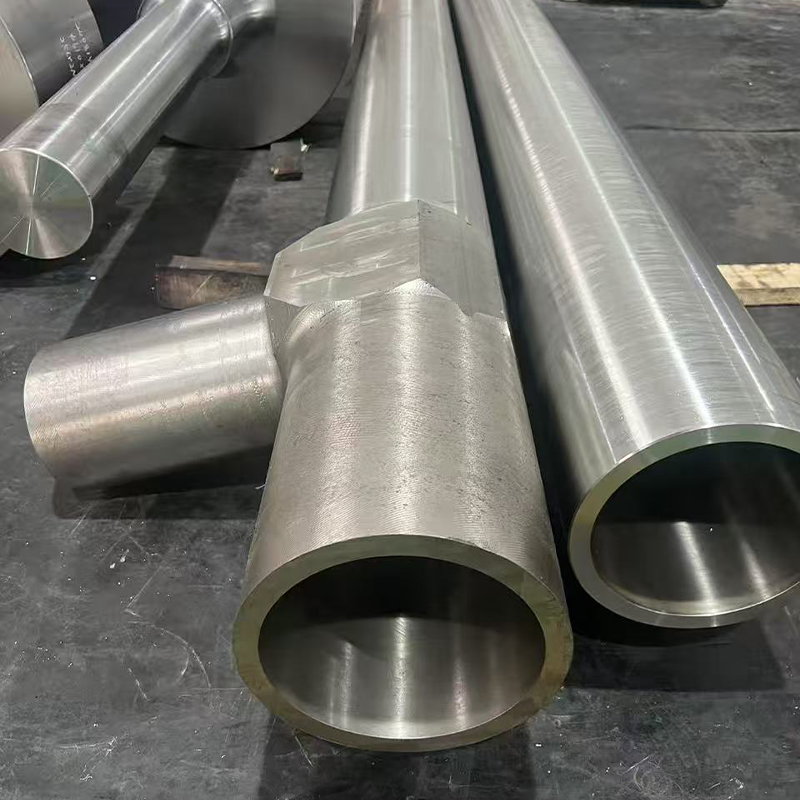 Aerospace Components with Certified Quality and TraceabilityAerospace components are built to withstand -60°C to 300°C and over 10,000 hours of service. Quality testing gates casting before machining, with traceability to melt batch and inspection records for critical applications.View Product →
One practical benchmark: at Suzhou Kokosili, quotations are supported by process-specific documentation because the company separates casting, machining, and inspection into independent production cells. This structure lets a buyer trace every cast part back to its melt batch and inspection record.
Common Casting Defects and How Inspection Catches Them
Porosity, shrinkage, and dimensional deviation are the three most common defects in cast metal parts, and each is caught by a different inspection method.
| Defect | Typical cause | Inspection method |
| Porosity | Trapped gas or air in the cavity | X-ray inspection, vacuum test |
| Shrinkage | Solidification feed path blocked | Ultrasonic testing, cross-section analysis |
| Dimensional deviation | Die wear, temperature variation | CMM measurement |
| Surface roughness | Mold surface degradation | Surface profilometer |
The key is where inspection happens. Casting suppliers that inspect after all processing are slower to detect problems. A better approach is in-process inspection: checking first-article dimensions, monitoring pouring temperature, and sampling from each casting batch before it moves on to CNC machining.
Our manufacturing capabilities cover casting and machining under one quality system, which means inspection can happen between casting and machining rather than after the finished part has already cost you money.
Supply Chain Risks in Casting Metal Parts Procurement
Casting metal parts procurement carries three distinct risks: tooling lock-in, material lead-time volatility, and quality escape.
- Tooling lock-in: Once a casting die is produced, switching suppliers means starting over. Protect yourself by reviewing the tooling design with the supplier before the die is cut, and confirm who owns the tooling file.
- Material lead-time volatility: Casting alloys like A380, ADC12, and 6061 aluminum are purchased by weight. Metal price swings can be passed on through raw-material surcharge clauses. Ask the supplier how they handle this.
- Quality escape: A single batch of defective cast parts can shut down an assembly line. Define an inspection protocol and a corrective-action process in the purchase order.
Recommended supplier engagement sequence
Share the 3D model and required inspection criteria before requesting a quote.
Review the recommended casting process and tooling design with the supplier.
Run first-article inspection and approve the sample before volume production.
Establish batch sampling frequency and defect reporting rules.
FAQ: Casting Metal Parts
What is the difference between casting and forging?
Casting metal parts are formed by pouring molten metal into a mold, while forged parts are made by compressing heated metal below its melting point. Casting enables complex internal geometries. Forging produces a denser grain structure and stronger parts for high-load applications.
When should I choose precision casting over CNC machining?
Choose precision casting when the part has complex internal geometry, a large volume of material would be wasted by machining from solid bar, or the alloy like stainless steel or titanium is difficult to machine. If the part is a simple block or shaft with tight tolerances, CNC machining is usually more practical.
What tolerance can cast metal parts achieve?
High-pressure die casting typically holds +/-0.05 to 0.1mm. Precision casting holds +/-0.025 to 0.05mm. Sand casting holds +/-0.5 to 1.0mm. If tighter tolerances are needed, the part can be post-machined.
How does casting volume affect unit cost?
Tooling cost is fixed, so higher annual volume spreads it over more parts. At 1,000 pieces, tooling may represent 40 to 50% of total part cost. At 50,000 pieces, tooling usually drops below 10%, and cycle time becomes the dominant cost factor.
Related products


Get In Touch
Follow us
Quick Links
Contact Us
Mobile : +86-18015435510
Mobile : +86-18013715311
Email : [email protected] Email :
whatsApp : +86-18118195312
Address : No. 8, Caiyunxiang Road, Xinzhuang Town, Changshu City
