
 English
  русский
  عربى
عربى 

Five-Axis Machining of Components: Capabilities, Benefits, and Supplier Selection
Content
- 1 Five-axis machining of components: a practical definition
- 2 What the five axes actually do
- 3 Why use five-axis machining for components
- 4 Industries where five-axis components appear most often
- 5 Design considerations for five-axis components
- 6 How to qualify a five-axis machining supplier
- 7 The bottom line
Five-axis machining of components: a practical definition
If a component needs a compound-angle hole, a deep undercut, or a critical dimension held to 0.02 mm, a conventional three-axis mill can quickly become a bottleneck. Five-axis machining of components solves this problem by adding two rotary axes to the normal X, Y, and Z linear movements. Instead of re-fixturing the part several times, the machine can bring the tool to the right orientation in one setup. The practical conclusion is simple: five-axis machining of components reduces setup time, improves repeatability, and makes complex geometries manufacturable. The rest of this article explains how the process works, where it makes economic sense, and what a buyer should verify before selecting a supplier.
What the five axes actually do
A five-axis CNC machine controls three linear axes (X, Y, and Z) plus two rotary axes, usually labeled A and B or A and C, depending on the machine configuration. In a typical five-axis machining center, the workpiece is mounted on a tilting rotary table while the cutting tool moves along the linear axes. The rotary axes allow the tool to approach the part from nearly any direction, which is why complex components can be machined in a single clamping.
The term “five-axis” is often used loosely, so it helps to distinguish between the common operating modes.
| Mode | Motion | Best suited for |
|---|---|---|
| 3-axis machining | Tool moves in X, Y, and Z while the part is fixed | Flat surfaces, pockets, holes, and basic prismatic parts |
| 3+2 positional machining | The part rotates to a fixed angle, then cutting continues in three axes | Angled holes, five-sided machining, and simple compound faces |
| Simultaneous 5-axis machining | All five axes move together during the cutting path | Freeform surfaces, turbine blades, impellers, and medical implants |
For five-axis machining of components, simultaneous movement matters most when the geometry is curved or when the tool must stay perpendicular to a changing surface. If the component only needs holes at fixed angles, 3+2 positional machining can be the more efficient choice.
Why use five-axis machining for components
Five-axis machining is rarely chosen simply because the machine is available. It earns its place when the component has complex geometry, demanding tolerances, or a sequence that would otherwise require multiple fixtures. The benefits show up in three practical areas.
Fewer setups, tighter repeatability
A component that is machined in one clamping keeps its datum structure intact. Every time a part is moved to a new fixture, there is a risk of location error, distortion, or cumulative misalignment. Five-axis machining of components allows features on several faces to be cut in the same program. This matters for components with true-position tolerances in the 0.02 to 0.05 mm range, where even a small fixture shift can push a feature out of specification.
Better tool access and surface quality
When the tool can tilt relative to the part, it can approach deep walls and internal cavities more directly. Shorter cutting tools can be used because the spindle orientation does most of the work, and shorter tools deflect less. That combination improves surface finish and extends tool life. Components with steep draft angles, undercuts, or contoured sealing surfaces often come off a five-axis machine with more consistent finish than they would after several three-axis operations.
Shorter cycle times for complex parts
Five-axis machining of components can compress lead times because more features are completed in one operation. A part that would normally go through a mill, a drilling center, and a finishing operation can sometimes be completed in a single workstation. The machine hour rate may be higher, but the total cost can still be lower when setup labor, idle time, and handling are included.
Industries where five-axis components appear most often
Five-axis machining is most valuable in industries where components combine complex geometry, difficult materials, and regulated quality requirements. The following examples are typical of what a precision machining supplier sees on a regular basis:
- Aerospace: turbine blades, impellers, structural brackets, and thin-walled housings. These parts often require difficult-to-machine alloys and tight profile tolerances. Aerospace components
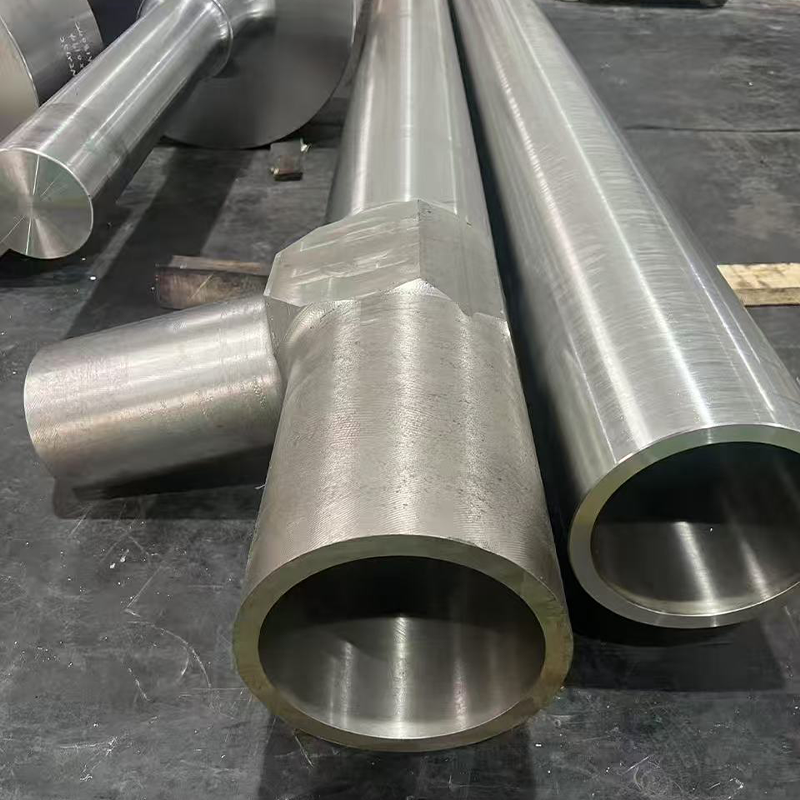 Custom Aerospace Components Suppliers, Company, ExporterSuzhou Kokosili International Trading Co., Ltd. Is China custom Aerospace Components Suppliers, Company and Exporter, Utilizing titanium ...View Product → are usually machined in a single setup to maintain aerodynamic surfaces and critical bolt patterns.
 - Medical devices: titanium implants, surgical handles, and instrument housings. Five-axis machining helps produce anatomical shapes and small internal features that would be almost impossible with a 3-axis approach. Medical device components
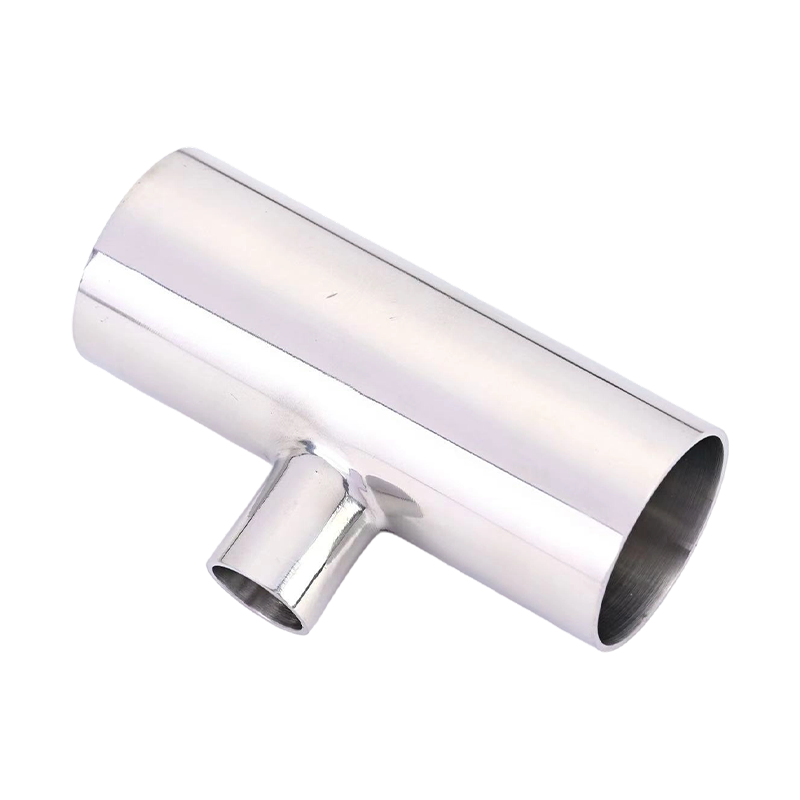 Custom Medical Device Components Suppliers, Company, ExporterSuzhou Kokosili International Trading Co., Ltd. Is China custom Medical Device Components Suppliers, Company and Exporter, Safe and Relia...View Product → also benefit from traceable material and inspection routines.
 - Semiconductor equipment: chamber parts, vacuum manifolds, end effectors, and precision fixtures. These components need clean surfaces, tight seal faces, and repeatable dimensions in materials such as aluminum, stainless steel, and engineering plastics.
- New energy and automotive: electric motor housings, battery cooling manifolds, and structural components that combine cooling loops with mounting features.
- Automation and robotics: robot wrists, rotary indexers, and precision frames where angular accuracy and rigidity are critical.
Not all five-axis work is metal. Many plastic and composite components also benefit from five-axis trimming, drilling, and contouring operations.
Design considerations for five-axis components
A good five-axis part design is not necessarily a complex shape. It is a design that uses the machine’s orientation flexibility to reduce operations. If you are preparing drawings for quotation, a few technical details will make a measurable difference in price and lead time.
Be specific about tolerances
General profile tolerances are not enough. Specify only the dimensions that affect function, assembly, or sealing. Typical machined tolerances for five-axis components range from 0.01 to 0.05 mm on critical features and 0.1 to 0.2 mm on standard dimensions. A single irrelevant tolerance can force additional inspection and slow down the whole program.
Avoid over-constrained geometry
If the component has a series of holes on different faces, think about the datums you are using. Five-axis machining can hold those holes accurately, but only when the datum structure is clear. If you are unsure whether a feature should be critical, leave it as a reference dimension. In many cases, simpler geometry with fewer critical tolerances costs significantly less to machine and inspect.
Match material and process early
Some components that are ultimately finished on a five-axis machine start as castings, forgings, or extrusions. Reducing the amount of material removal lowers cycle time and tool wear, especially for titanium and stainless steel. When material cost is high, combining near-net-shape production with five-axis finishing can be the most economical route. If you need to evaluate the right process for a specific component, our precision machining services can show the typical process sequence and material options we work with.
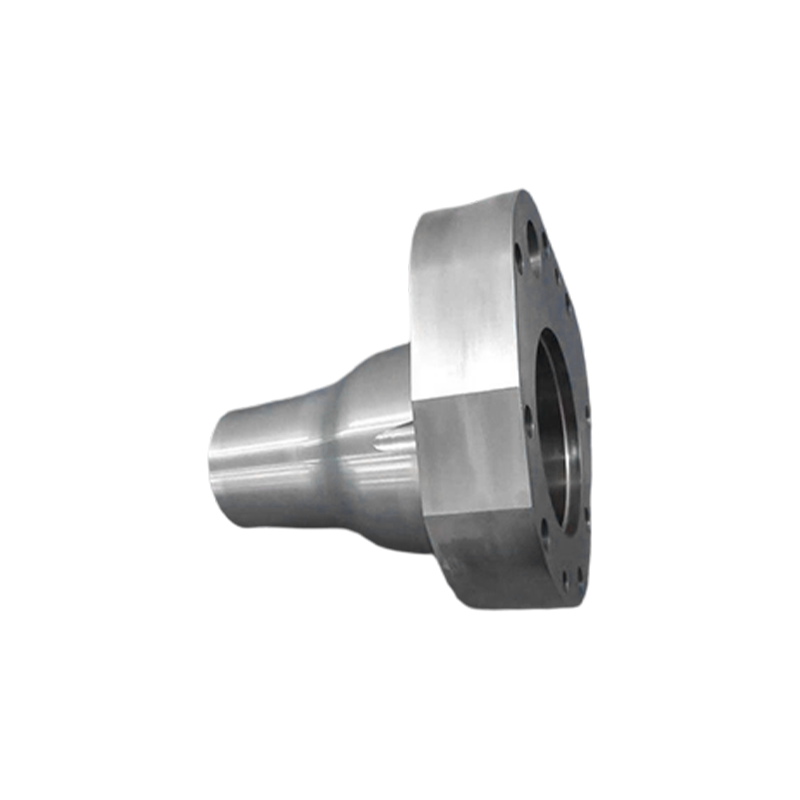 Custom Precision Machining Suppliers, Company, ExporterSuzhou Kokosili International Trading Co., Ltd. Is China custom Precision Machining Suppliers, Company and Exporter,View Product →
How to qualify a five-axis machining supplier
The number of axes on a machine is not a guarantee of quality. The process around that machine determines whether your components arrive on time, in tolerance, and with the right documentation. A five-axis machining partner should be evaluated on process capability, quality control, and communication, not just on the equipment list.
Check process capability and depth
Look at the factory layout, machine types, and in-house secondary operations. A supplier with casting, forging, and finishing capabilities can manage more of the supply chain and reduce the risk of miscommunication between subcontractors. We describe our process range and facility structure on our manufacturing capabilities page, but you should also ask for details about machine capacity and programming experience before sending a complex drawing.
Ask for quality evidence
Five-axis components with tight tolerances need more than a final visual check. The supplier should be able to provide inspection reports, material certificates, and first article inspection results. Ask how many parts are measured, what equipment is used, and how nonconforming parts are handled. Our quality-testing process is designed to verify critical dimensions before shipment, and that kind of systematic approach is exactly what a customer should expect from any serious machining partner.
Test communication early
Complex components usually require iterations. A good supplier will ask questions about datums, surface finish, tooling access, and batch size before quoting. Slow communication during the quotation stage is often an early warning of slow response during production. The best way to test this is to send a real drawing, not a simplified part request. If you want to evaluate how we respond to technical questions, contact our engineering team with a print or a rough sketch.
A concise qualification checklist for five-axis machining of components should include:
- Verify the supplier’s in-house manufacturing processes and machine envelope.
- Confirm the supplier can measure critical tolerances with calibrated equipment.
- Request material traceability and first article reporting policies.
- Check how the supplier handles engineering changes and urgent lead times.
- Run a trial part before committing to high-volume production.
The bottom line
Five-axis machining of components is a reliable, cost-effective way to manufacture complex geometry, but it is not a substitute for disciplined design and process control. Use it when you need fewer setups, better tool access, or tighter repeatability. Then choose a supplier that can back the machine capacity with measurable quality control, clear communication, and proven process depth. That combination, not the number of axes, is what makes a precision component successful.
Related products


Get In Touch
Follow us
Quick Links
Contact Us
Mobile : +86-18015435510
Mobile : +86-18013715311
Email : [email protected] Email :
whatsApp : +86-18118195312
Address : No. 8, Caiyunxiang Road, Xinzhuang Town, Changshu City
