
 English
  русский
  عربى
عربى 

Data Center Liquid Cooling Manifold: Design, Materials & Manufacturing Guide
Content
A liquid cooling manifold does not look impressive next to a cold plate or a CDU, but it is the component that decides whether coolant actually reaches every server at the right flow and pressure. The manifold receives coolant from a coolant distribution unit (CDU), splits it across server racks or individual servers, and then collects the warm return flow. When flow distribution is uneven, pressure drop is excessive, or a fitting leaks, the whole cooling loop suffers regardless of how well the rest of the system is designed. The practical conclusion is that manifold performance is determined by material selection, machining tolerances, and factory testing — all of which can be checked before installation.
What a liquid cooling manifold does in a data center
The manifold is the distribution hub of the liquid cooling network. On the supply side, one inlet branches into multiple outlets that connect to server racks or cold plates. On the return side, multiple inlets merge into one outlet that routes the warm coolant back to the heat rejection circuit. This arrangement lets a single CDU serve many loads while keeping flow and pressure predictable at every branch.
Two types of manifolds dominate data center deployments. Row-based manifolds are installed along a row of racks and form the secondary fluid network between CDUs and individual racks. Rack-level manifolds are mounted inside a single rack, usually as vertical supply and return tubes, and feed the servers in that rack directly. The distinction matters because the design requirements are different.
Row-based manifolds
Row-based manifolds act as the backbone of high-density cooling zones. They concentrate the connection point for an entire row, reduce the number of CDU ports, and let an operator isolate a single row for maintenance without draining the whole loop. The main design goal is a low pressure drop so that the CDU pump can push coolant through every branch, including the furthest rack, even when the row runs at partial load.
Rack-level manifolds
Rack-level manifolds are smaller but stricter in their tolerance requirements. A single rack may contain dozens of servers at different elevations, and the manifold must deliver a nearly identical flow to every branch. Small differences in port diameter or internal bore can shift the flow split noticeably and leave servers near the top of the rack under-cooled. This is why rack manifolds are machined as precision parts rather than assembled from standard pipe fittings.
Design factors that determine manifold reliability
Reliability comes from specific design choices made before the first prototype is machined, not from good intentions during installation.
Flow distribution and pressure drop
Uniform flow requires that every outlet branch sees nearly the same pressure difference from the inlet to the branch point. Designers achieve this with internal orifice plates, optimized outlet spacing, or intentionally restricted outlets that keep the variance between branches small. The pressure drop across the manifold is a documented value on any proper datasheet. In typical cold plate loops, the supply-to-return differential pressure sits in the range of 0.5 to 1.5 bar depending on flow rate and port size. An oversized manifold produces uneven flow at low loads; an undersized one forces the pump to work harder and raises coolant temperatures.
Connection types and quick disconnects
Most server-facing manifolds use quick disconnects so that a rack or server can be removed without draining the loop. Universal quick disconnects (UQD), blind-mate connectors, and drip-free couplings are the three common categories. Blind-mate connectors engage automatically when a rack is pushed into position, while manual UQDs are simpler and more cost-effective. The manifold outlet must match the connector standard used by the server OEM, so confirming that interface early is one of the most practical steps in a liquid cooling project.
Material selection
The manifold body must be chemically compatible with the coolant and with the other wetted metals in the loop. The materials below cover most data center manifold designs.
| Material | Corrosion behavior | Main strength | Typical use | Relative cost |
|---|---|---|---|---|
| Stainless steel 304 | Good with standard coolants | Weldability and mechanical strength | Standard row and rack manifolds | Medium |
| Stainless steel 316 | Better resistance to chlorides and impurities | Long-term stability in mixed-metal loops | Mission-critical and harsh environments | Higher |
| Copper | Good when corrosion inhibitors are used | High thermal conductivity and easy brazing | High-heat racks and heat exchanger circuits | Higher |
| Aluminum | Requires coolant additives and protective coating | Lightweight and cost-effective | Weight-sensitive and lower-cost designs | Lower |
Regardless of the material, internal surface finish and cleanliness matter as much as the grade itself. A rough bore traps particles and creates local turbulence, and those particles can later damage quick-disconnect seals. Most reputable manifold suppliers specify a surface roughness value on sealing faces and flush the internal passages before packaging.
Manufacturing precision matters more than it looks
Manifold reliability is decided at the machining stage. O-ring grooves, sealing faces, thread depths, and port spacing must hold tolerances that a standard unmeasured pipe fitting cannot guarantee. An O-ring groove that is only a few hundredths of a millimeter too shallow can over-compress the seal and cause permanent deformation. A port drilled at a slight angle can make a quick disconnect sit crooked and begin leaking after thermal cycling. In welded designs, penetration depth and porosity control are just as critical, which is why serious manifold manufacturers use automated orbital welding or tightly qualified manual welders.
Precision CNC machining also determines how easily a custom manifold integrates with the rest of the rack. A supplier that can machine the body, drill and tap every port, and perform final assembly in one place reduces the risk of dimensional mismatch between parts. This is especially valuable when the manifold must match a specific rack layout, bracket geometry, or OEM connector pattern. For this reason, we treat manifolds as precision components and produce them through CNC precision machining with controlled setups and measured outputs — not as casual pipework.
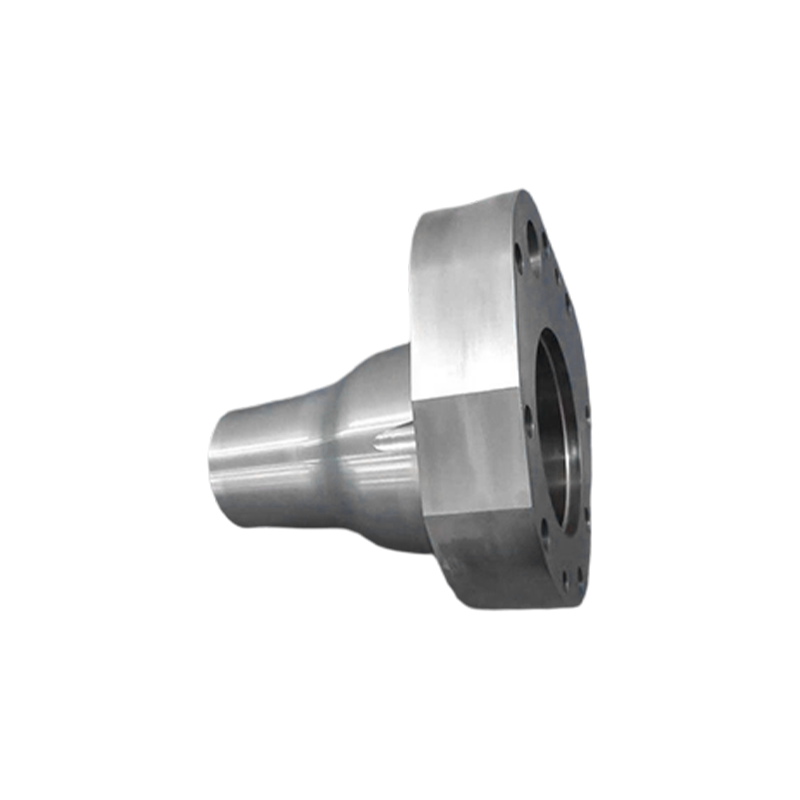 Custom Precision Machining Suppliers, Company, ExporterSuzhou Kokosili International Trading Co., Ltd. Is China custom Precision Machining Suppliers, Company and Exporter,View Product →
What to verify before ordering manifolds
For a manifold, the quality evidence is more important than a glossy datasheet. Procurement teams should ask for the following records before committing to an order:
- Material certificates showing the exact grade and heat number of the stainless steel, copper, or aluminum used.
- A dimensional inspection report covering port spacing, thread depth, and mounting hole positions against the approved drawing.
- A pressure test record showing the test pressure, hold time, and result, typically 1.5 times the rated working pressure.
- A leak test record, preferably from a helium mass-spectrometer test for welded manifolds.
- A cleanliness report or internal flushing record confirming that no chips, flux, or grinding dust remain inside the passages.
- Weld qualification records if the manifold design uses welded joints.
Not every machine shop can produce this documentation in-house. A supplier with disciplined quality control and the right factory testing equipment is far more likely to deliver complete inspection data with each batch. We run these checks in our own facility, so the records travel with the parts instead of arriving separately after delivery. You can review the scope of our quality testing process and the equipment involved.
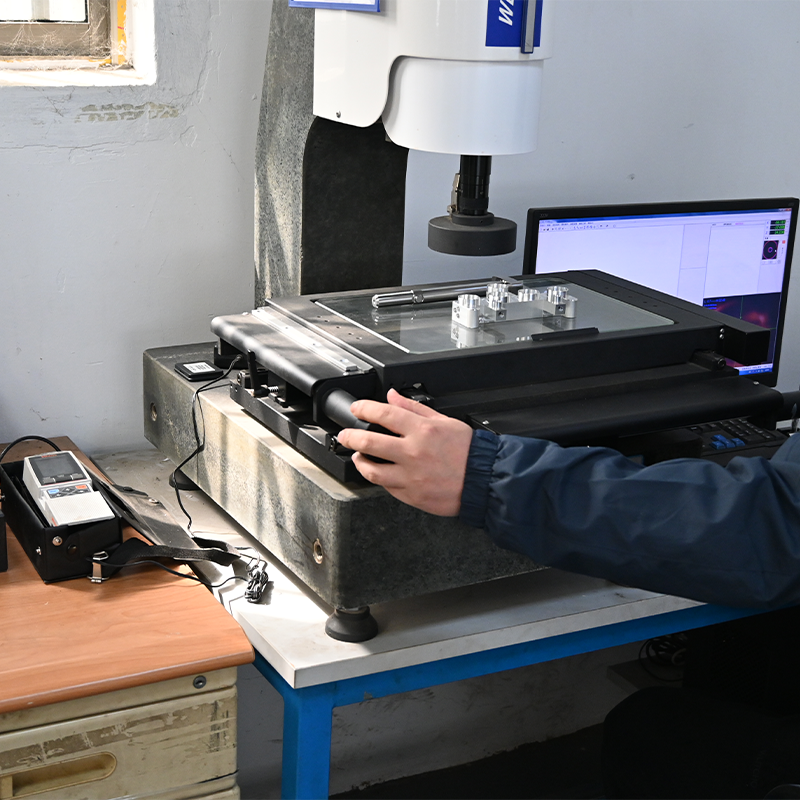 Custom Testing Equipment Suppliers, Company, ExporterSuzhou Kokosili International Trading Co., Ltd. Is China custom Testing Equipment Suppliers, Company and Exporter,View Product →
Choosing a supplier that understands the whole cooling loop
The best manifold suppliers are not just pipe benders. They understand the loop as a system: how coolant flows, where pressure is lost, what connector standards the server OEMs expect, and how to manufacture consistently at volume. That understanding usually comes from experience with related products and adjacent industries, not from a single lucky project.
When you evaluate a partner, ask about their broader liquid cooling experience. A manufacturer that already produces liquid cooling pipeline products — not only manifolds but also the supply and return lines, mounting hardware, and connection components — can unify the design and shorten your lead time. Our work in AI data center cooling covers precision manifolds, matching tube assemblies, and complete cooling circuit components for high-density racks.
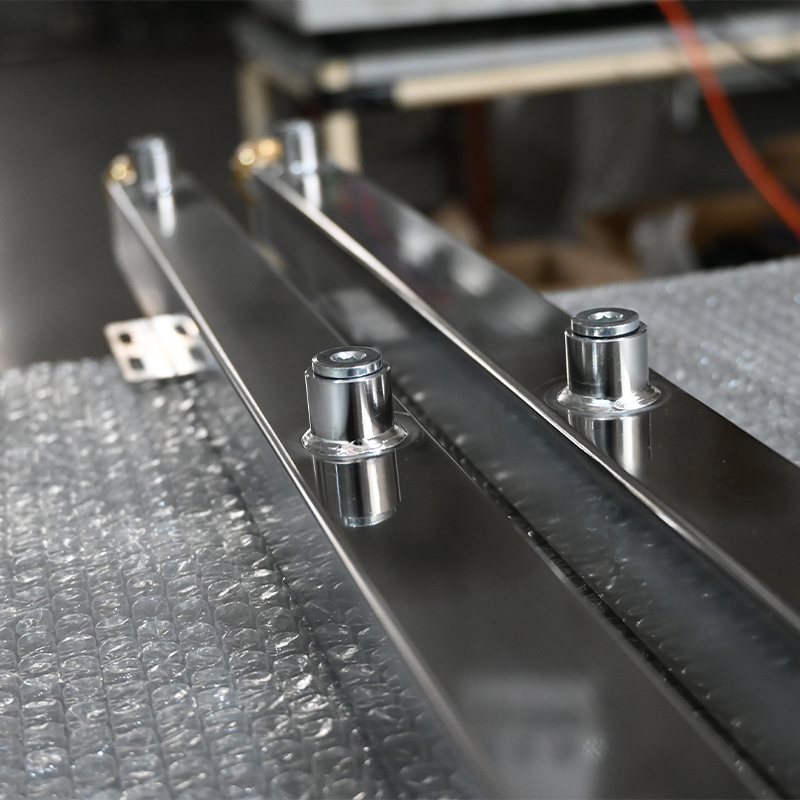 Wholesale Liquid Cooling Pipeline/Manifold Suppliers/ExporterSuzhou Kokosili Wholesales Liquid Cooling Pipelines And Manifolds For Energy Storage And Data Center Applications As A Trusted China Supp...View Product →
So the practical path for a custom manifold project is straightforward: define the flow rate and pressure budget, confirm the connector standards, select the material family that suits your coolant, and verify manufacturing quality before placing the order. If you are developing a manifold for a rack prototype or retrofitting an existing facility, contact our engineering team with your flow, pressure, and space constraints. The earlier those constraints are shared, the fewer surprises appear at the pressure-test stage.
Related products


Get In Touch
Follow us
Quick Links
Contact Us
Mobile : +86-18015435510
Mobile : +86-18013715311
Email : [email protected] Email :
whatsApp : +86-18118195312
Address : No. 8, Caiyunxiang Road, Xinzhuang Town, Changshu City
