
 English
 русский
 عربى


Manufacturing Metal Parts: Tolerances, Process Choice, and Supplier Vetting
Content
- 1 Process Choice Sets the Unit Price Before the Quote Does
- 2 Tolerance Bands Decide Which Process Can Even Bid
- 3 Where Manufacturing Metal Parts Programs Lose Money After the Quote
- 4 Supplier Checks That Predict On-Time Delivery
- 5 From Prototype to Volume: Three Stages in Manufacturing Metal Parts
- 6 Frequently Asked Questions About Manufacturing Metal Parts
A 6061 aluminium bracket can leave a machine shop at $6 or at $60, and the decision that separates those two numbers is usually made before the first chip is cut. RFQs that come back with a costed, comparable answer inside a week name three things: the process route, the tolerance band on the critical features, and the annual volume. RFQs that say only "make this part to the drawing" return three prices that cannot be compared, and the cheapest of them is often the one that fails first-article inspection three weeks later.
Process, tolerance, and volume form a triangle. Pull one corner and the other two move: relax the tolerance and casting enters the bidding; double the volume and tooling amortisation stops being a deterrent; switch to a harder alloy and machining cycle times stretch.
Process Choice Sets the Unit Price Before the Quote Does
At 1,000 pieces a year, the most expensive route to an identical metal part can cost more than seven times the cheapest one. That spread is not supplier markup; it is the shape of the cost curve each process follows.
Tooling is a fixed cost; cycle time, material yield, and finishing are variable. Casting and stamping front-load the fixed half, with dies running from a few thousand dollars to six figures, and then produce parts at a fraction of the machining rate. Machining inverts that logic: no tooling beyond a fixture and a program, but every single part pays for spindle time, tool wear, and inspection. The crossover usually lands somewhere between 3,000 and 15,000 pieces depending on part size and geometry. Below it, subtractive routes win. Above it, forming routes win until the tolerance requirement pushes the part back to machining.
If two quotes for the same drawing differ by more than 30 percent, they are almost never quoting the same process. Ask which route each supplier priced before you compare the numbers feature by feature.
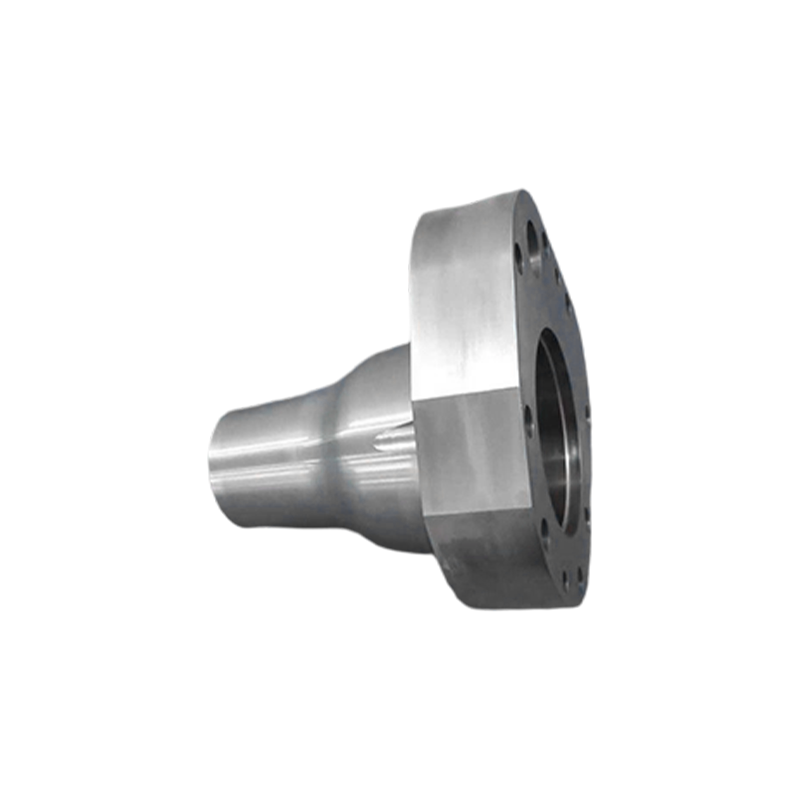 Custom Precision CNC Machining for High-Accuracy Metal ComponentsCustom CNC machining service for high-accuracy metal and non-metal components, supported by a 9,000 sq m machining and assembly plant and multi-process manufacturing review.View Product →
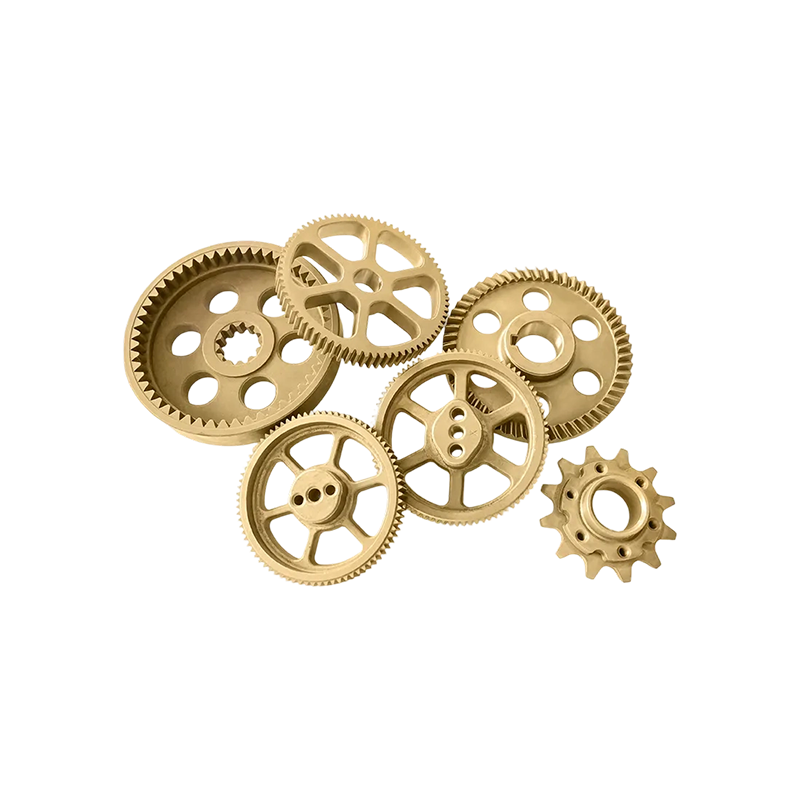
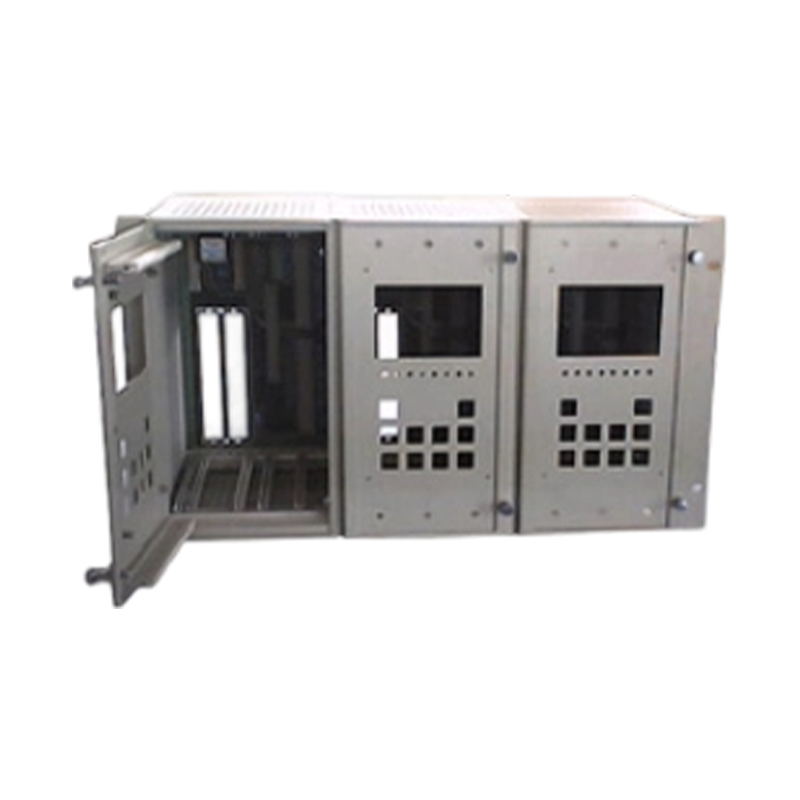
Keeping several routes under one roof shortens that comparison considerably. Suzhou Kokosili International Trading Co., Ltd. (Kokosili), a precision manufacturer based in Suzhou, covers manufacturing metal parts across ten forming and finishing routes including precision casting, high-pressure die casting, forging, extrusion, powder metallurgy, injection moulding, 3D printing, gear processing, stamping and sheet metal, and precision machining. Those routes run across a 9,000 square metre CNC machining and assembly plant and a 10,000 square metre precision casting plant, so casting and machining can be priced against each other inside one engineering review instead of two supplier audits.
Tolerance Bands Decide Which Process Can Even Bid
A plus or minus 0.02 mm callout on a bore eliminates every casting and stamping route on the drawing before price is discussed. Tolerance is a gate, not a preference: each process has a statistical capability ceiling, and once a feature is specified tighter than that ceiling, the supplier either declines or adds a secondary operation that erases the original cost advantage.
| Process route | Typical tolerance | Typical surface finish | Cost-efficient volume | Best-fit geometry |
| Precision CNC machining | +/- 0.005 to 0.02 mm | 0.4 to 0.8 um | 1 to 5,000 pcs | Complex 3D features, thin walls, tight bores |
| Investment precision casting | +/- 0.10 to 0.30 mm | 3.2 to 6.3 um | 500 to 10,000 pcs | Intricate internal cavities, heat-resistant alloys |
| High-pressure die casting | +/- 0.05 to 0.15 mm | 1.6 to 3.2 um | 10,000 pcs and above | Thin-wall housings, enclosures, brackets |
| Sheet metal stamping | +/- 0.10 to 0.25 mm | 1.6 to 3.2 um | 5,000 pcs and above | Flat and formed panels, chassis parts |
| Powder metallurgy | +/- 0.05 to 0.10 mm | 1.6 to 3.2 um | 20,000 pcs and above | Small symmetrical parts, gears, bushings |
| Metal 3D printing | +/- 0.05 to 0.20 mm | 6.3 to 12.5 um | 1 to 200 pcs | Conformal cooling channels, lattice structures |
The cost of tightening is not linear. Moving a turned diameter from plus or minus 0.10 mm to plus or minus 0.01 mm typically multiplies the cost of that single feature by three to five times, because it forces slower feeds and speeds, extra spring passes, temperature-stable fixturing, and in-process gauging instead of end-of-line sampling. The practical rule is to hold tight tolerances only on features that carry function, such as a bearing seat, a sealing face, or a mating dowel hole, and let everything else float to the general tolerance block.
Specify the tolerance the assembly actually needs, not the tolerance the CAD default happened to offer.
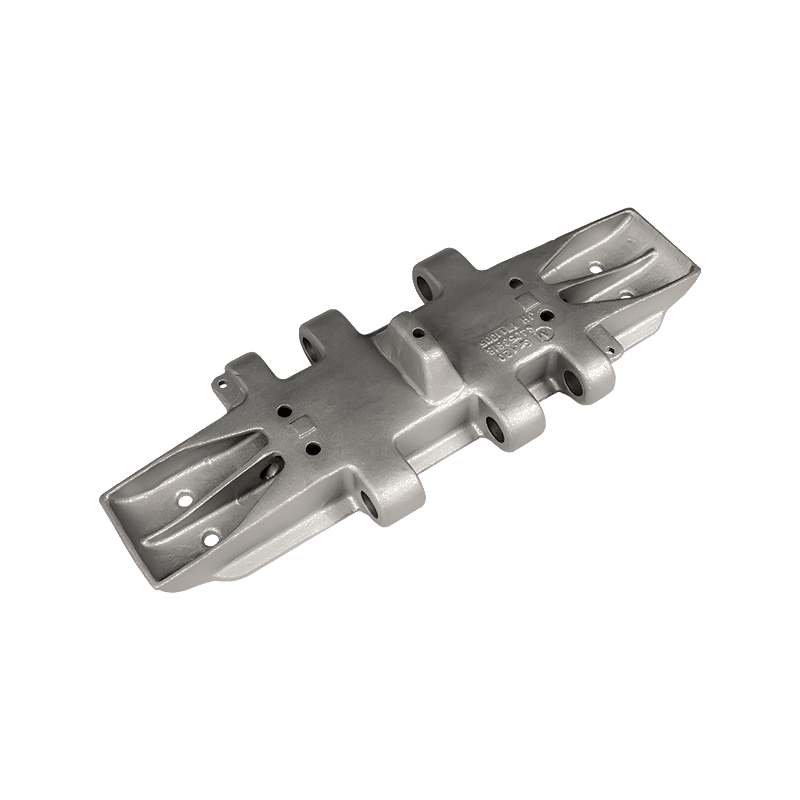 Precision Casting for Complex Metal Components and Near-Net ShapesLost-wax precision casting for complex metal structures, offering near-net-shape parts, CT4-CT6 tolerance capability, and reduced machining needs for small-batch, high-value components.View Product →
Where Manufacturing Metal Parts Programs Lose Money After the Quote
The unit price on a purchase order is rarely the number that lands in cost of goods sold. On machined and cast metal parts, secondary operations, documentation, and scrap routinely add 15 to 40 percent on top of the quoted piece price, and none of it shows up in a line-by-line bid comparison.
- Machining or casting cycle
- Raw material at nominal weight
- One finishing operation
- Standard bulk packaging
- Deburring, tumbling, passivation, anodising
- First-article inspection report and material certificates
- Fixture and gauge amortisation
- Scrap and rework on the first production runs
- Individual wrapping and moisture barrier packing
Volume decides which of these dominates. On a 50-piece prototype order, setup and inspection can double the unit price, and no design change will fix that. On a 20,000-piece die-cast run, the same documentation cost is negligible, while a two percent scrap rate on a thin-wall housing costs more than the tooling did. Buyers who track these two regimes separately stop arguing about the wrong number.
The quoted piece price plus tooling amortisation, secondary operations, inspection documentation, packaging, and expected scrap. It is the only figure that can be compared fairly across competing processes.
Supplier Checks That Predict On-Time Delivery
Delivery performance on custom metal parts is decided by process coverage and scheduling discipline, not by goodwill. Five checks separate suppliers who hit dates from suppliers who explain misses.
- Process coverage: can they quote casting, machining, and sheet metal from one engineering review, or does every route change trigger a new supplier audit?
- In-house inspection: hardness testers, coordinate measuring machines, and surface roughness gauges on site beat certificates emailed from an outside lab.
- Scheduling system: an ERP with live order status and an intelligent warehouse for tooling and stock means release dates move for real reasons rather than lost paperwork.
- Tooling ownership: who holds the fixtures, who tracks tool life, and what happens to the gauges when a program pauses for six months.
- First-article discipline: a supplier that ships dimensional reports with the first batch rarely surprises you at piece 5,000.
Ask for the quality testing plan in writing: which instrument measures which feature, at what frequency, and against what acceptance limit. A supplier that answers with a measurement plan instead of a certificate scan is describing how the entire order will run. For aerospace and defence programs the bar rises again, with traceable material lots, documented process control, and a dedicated route for aerospace-grade components rather than a general-purpose machining queue.
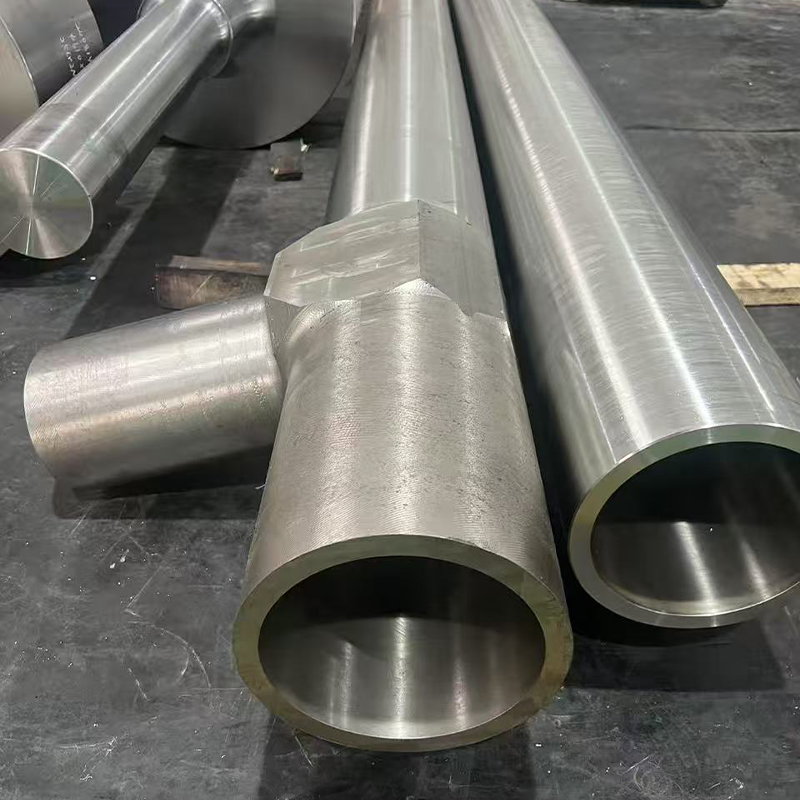 Custom Aerospace Components for UAV, Helicopter, and General Aviation SystemsCustom aerospace component series using titanium and carbon fiber composites for UAV, helicopter, and general aviation applications, with quality testing plans for reliable production transitions.View Product →
From Prototype to Volume: Three Stages in Manufacturing Metal Parts
A part that survives prototyping can still fail at 5,000 pieces if the process route is never re-planned between the two. Three stages keep that transition boring.
Stage 1: DFM review and process routing
Send 2D drawings, 3D models, and an honest annual volume forecast. What should come back is a written route: which features are machined, which are formed, which tolerance is driving cost, and where a design change would save money. A DFM note that only confirms feasibility without naming a cost driver is not useful.
Stage 2: First-article inspection
Demand a dimensional report on every critical feature, material certificates, and a surface finish reading. Compare measured values against the tolerance band, not against nominal. A first article sitting in the centre of the band leaves room for tool wear; one sitting on the edge will drift out of specification within a few thousand pieces.
Stage 3: Volume ramp on scheduled releases
Move to scheduled releases against a blanket order rather than one-off purchase orders. This is where an ERP-driven supplier earns its keep: material planning, tool maintenance, and in-process sampling all run on the same schedule, so lead times do not stretch every time you reorder.
Frequently Asked Questions About Manufacturing Metal Parts
What is the cheapest process for metal parts in small quantities?
Precision CNC machining, almost always. Below roughly 1,000 pieces the tooling cost of casting, stamping, or die casting cannot be amortised, so subtractive routes win on total cost even though the per-part machining rate looks higher. Sheet metal fabrication competes for flat, low-tolerance parts such as brackets and panels.
How tight a tolerance can I realistically specify?
Plus or minus 0.005 mm is achievable on precision machined features under controlled temperature, but it is only practical on a small number of features and it multiplies cost. For most industrial parts, plus or minus 0.02 to 0.05 mm on functional features and a general tolerance block elsewhere keeps both quality and price workable.
Why do quotes for the same metal part vary so much?
Because suppliers are quoting different processes, volumes, or inclusions. One price may assume casting with 10,000-piece tooling amortisation, another billet machining with no tooling at all. Normalise the comparison by asking each supplier to state the process route, the assumed annual volume, and which secondary operations are included.
How can I cut cost without changing design intent?
Three moves usually work: relax tolerances on non-functional surfaces, standardise on one material grade instead of several near-identical alloys, and consolidate features so the part needs fewer setups and fewer secondary operations. A re-quoted part with loosened non-critical tolerances commonly comes back 10 to 25 percent cheaper.
Related products


Get In Touch
Follow us
Quick Links
Contact Us
Mobile : +86-18015435510
Mobile : +86-18013715311
Email : [email protected] Email :
whatsApp : +86-18118195312
Address : No. 8, Caiyunxiang Road, Xinzhuang Town, Changshu City
